ラベル se-戦場の性 の投稿を表示しています。 すべての投稿を表示

2013/09/22

性のジハードと慰安婦 (シリア)

ロシア・トゥディより

この話は、コメント欄でシリカ太郎さんにも指摘して頂いた。シリアの内戦に「慰安婦」が登場したというニュース。「性のジハード」として大分前から海外では話題になっていた。もちろん欧米では「慰安婦」などという言葉は使っていない。あまり幅広く慰安婦という言葉を適用することには抵抗があり、このニュースは取り上げなかったのだが、韓国メディアも慰安婦(위안부)という言葉を使ってこのニュースを報じていたので改めて注目してみた。韓国メディアも本音では慰安婦問題とは戦地での買春問題だと認識しているようである。

大儀のない戦争だから日本軍は慰安婦を必要としたのだとか(吉見義明)、聖戦といいながら日本兵はセックスをしていたなどと難癖をつける人もいるが、戦場の性の問題は彼らが考えているより深刻なのかもしれない。ただし、戦場の性は、たとえそれが「ジハード」の名において語られたとしても、アラブですら現代ではいい印象を持たれていない(少なくともポリティカル・コレクトネスには反している)という点には留意すべきだろう。性の聖戦(Jihad Al Nikah)を容認しているのは、スンニー派の中でも保守的な人々だけらしい。

シリアに「聖戦慰安婦」=チュニジア女性、反体制派に従軍

【チュニスAFP=時事】チュニジアのジェドウ内相は19日、シリア内戦でアサド政権軍と戦っている反体制派イスラム武装勢力メンバーを支えるため、多数のチュニジア人女性が「慰安婦」として従軍していることを明らかにした。制憲議会メンバーに語った。

イスラム戦士の慰安婦として戦場に赴くことは「性のジハード(聖戦)」と呼ばれ、同内相は「彼女らは20人、30人、100人の武装勢力メンバーと性交渉を行い、妊娠して帰国する」と語った。これら女性の数は不明だが、メディア報道によると、数百人がシリア内戦に身を投じたという。

女性が配偶者以外の不特定多数の男性と性的関係を持つことについて、イスラム過激派サラフィストは「性の聖戦」の場合は正当な行為だと認めている。

時事 2013.9.20

「チュニジア女性、慰安婦(위안부)としてシリア内戦に参加」

多数のチュニジア人女性が反乱軍の慰安婦としてシリア内戦に参加していると中東の日刊紙ガルフニュースが21日報じた。

Lotfi Ben Jeddouチュニジア内相は最近議会でこのように明らかにし、アラビア語で「性の聖戦」を意味する「Jihad Al Nikah」の名でシリアの戦場において反乱軍と性的関係をもった後、妊娠して帰国する女性が増加している」と話した。
Ben Jeddou大臣は「チュニジアの慰安婦女性が一人当たり20人から30人、多くて100人の反乱軍兵士を相手にする」とし、「しかし私たちはこれを黙認したまま手をこまねいている」と自省した。


チュニジアの前宗教指導者Sheikh Othman Battikhは、4月にシリア人少女13人がだまされてシリアへ旅に出た後、パシャル アルアサド政権に抵抗する反乱軍の慰安婦になったと話した。

その数日後、地位を追われたSheikh Othman Battikhは、いわゆる「性のジハード」と規定した後「売春」と異なるところがないと非難したとアラブ圏の衛星放送アララビヤが伝えた。

Mostafa Bin Omarチュニジア警察庁長官も去る8月がアルカイダ武装勢力が掌握したチュニジア西部で「性のジハード」のための組織を摘発したと明らかにしたことがある

Mostafa Bin Omar長官はアルカイダと関連した「Ansar Shariah」が未成年の少女に顔を隠した服を着せシリアの反乱軍戦士とのセックスを強要したと説明した。

この他にも相当数のチュニジアの若者がシリアに渡り、反乱軍として活躍していると分かった。

チュニジア内務省は3月から約6千人に達する自国民のシリア旅行を禁止した。また、チュニジアの青年たちをシリアに送り、反乱軍に加担させる組織を結成した疑惑で86人を逮捕した。


翻訳に当たって参考にした:

"튀니지 여성 위안부로 시리아 내전 가담"

(두바이=연합뉴스) 유현민 특파원 = 다수의 튀니지 여성들이 반군의 위안부로 시리아 내전에 가담하고 있다고 중동 현지 일간지 걸프뉴스가 21일 보도했다.

로트피 빈제두 튀니지 내무장관은 최근 의회에서 이같이 밝히고 아랍어로 '성적 성전'(性的 聖戰)을 뜻하는 "'지하드 알니카'의 이름으로 시리아 전장에서 반군과 성관계를 맺은 뒤 임신한 채 귀국하는 여성이 늘고 있다"고 말했다.

빈제두 장관은 "튀니지 위안부 여성이 인당 20명에서 30명, 많게는 100명의 반군을 상대한다"면서 "그러나 우리는 이를 묵인한 채 두 손을 놓고 보고만 있다"고 자성했다.


튀니지의 전 종교지도자 셰이크 오트만 바티크는 지난 4월 시리아 소녀 13명이 속아서 시리아로 여행을 간 뒤 바샤르 알아사드 정권에 저항하는 반군의 위안부가 됐다고 주장한 바 있다.

그 후 며칠 만에 자리에서 쫓겨난 셰이크 오트만은 이를 소위 '성적 성전'이라고 규정한 뒤 '매춘'과 다를 바 없다고 비난했다고 아랍권 위성채널 알아라비야가 전했다.

무스타파 빈오마르 튀니지 경찰청장도 지난 8월 이 알카에다 무장세력이 장악한 튀니지 서부에서 '성적 성전'을 위한 조직을 적발했다고 밝힌 바 있다

빈오마르 청장은 알카에다와 연계된 '안사르 샤리아'가 미성년 소녀들에게 얼굴까지 가린 옷을 입힌 채 시리아 반군 전사들과의 성관계를 강요했다고 설명했다.

이 밖에도 상당수의 튀니지 청년들이 시리아로 건너가 반군으로 활약하고 있는 것으로 알려졌다.

튀니지 내무부는 지난 3월부터 약 6천명에 달하는 자국민의 시리아 여행을 금지했다. 또 튀니지의 청년들을 시리아로 보내 반군에 가담시키는 조직을 결성한 혐의로 86명을 체포했다.

2013/06/26

A・ジョリー、国連安保理で突然のスピーチ 、戦時性暴力問題

外務・イギリス連邦大臣とアフリカを訪れたA.ジョリー (2013.3)

戦場の性の問題(Rape as a weapon 戦争の手段としてのレイプ)に国際社会が神経質(過敏と言うべきか?)になっている時代だから、特に公人の場合、発言には十分注意が必要。アンジョリーナ・ジョリーは以前からこの問題に熱心に取り組んでいる。

A・ジョリーさん、国連安保理で突然のスピーチ 戦時下の性的暴力への対応求め

米女優のアンジェリーナ・ジョリー(Angelina Jolie)さんが24日、国連安全保障理事会(UN Security Council)で突然のスピーチを行い、シリア問題やその他の紛争を引き合いに出して安保理が戦時下のレイプへの対応を怠っているとして非難した。

 ジョリーさんは、シリア内戦で対立の溝が埋まらない露・中・米・仏・英の各国の大使が耳を傾ける中、紛争下で性的暴行の犠牲者が数十万人に上る事実を安保理が深刻に受け止めていないと批判した。

 5月に乳腺切除手術を受けたことを告白したジョリーさんはその後、紛争下の性的暴行に関するロビー活動を積極的に展開している。先週には、ヨルダンにあるシリア難民キャンプを訪問したばかり。この日のジョリーさんの登壇が発表されたのは、会議の開始直前のことだった。

 ジョリーさんは、「これらの犯罪は、戦争中には起こっても仕方のないことだから起こるのではなく、国際社会が容認しているから起こるのです。国連安保理が戦時下のレイプと性的暴行を優先課題に掲げれば、それは本当に優先課題として扱われ、前進が望めるはずです。もし優先されなければ、このおぞましい出来事は続いていきます。この議場を出られる際に、どうかこの問題を看過してしまわないでください」と呼び掛けた。

 安保理は紛争下での性的暴行を非難する決議を採択した。英国のウィリアム・ヘイグ(William Hague)外相は、9月の国連総会でこの問題をテーマとした新たな会合を設定することを明らかにした。

AFP 2013.6.25

2013/06/04

吉見義明の意地?

池田信夫:(もはや)イデオロギーより意地

「軍の施設として組織的に慰安所を作った国はほかにない。日本の慰安婦制度は特異だった」と吉見教授。

池田信夫はこのニュースにドイツ軍やソ連軍を例に挙げ、嘘だと批判しているが、自分が思うに、吉見教授の凄さは、嘘をつかずに人々を事実と異なる方向に誘導してしまう理論構成力にある。何らかの理屈を用意しているはずだ。

彼は6年前のニューヨークタイムズのインタビューに「Unlike other militaries that have used wartime brothels, the Japanese military was the “main actor,” (戦時売春宿を利用した他の軍隊と異なり、日本軍は<慰安所システムの>主役であった)」と答えているように、この種のシステムを持っていたのが日本軍だけでないと知っている。2007年以降になると、韓国軍の慰安所についてもコメントしている。したがって、彼は他国の軍隊にも「慰安所」があった事を知っているのは間違いない。

大方「それらの国では、内務省や総督府に相当する役所の関与が証明されていない」といったような理屈を用意しているのではないか?それにしても、軍の関与が、という話はどうなった?池田信夫はイデオロギーというより意地だと言っているが・・・。

「日本の慰安婦制度は特異」 歴史学者が橋下氏批判

旧日本軍の従軍慰安婦をめぐる日本維新の会共同代表の橋下徹大阪市長の発言に絡み、慰安婦問題に詳しい中央大の吉見義明教授(日本史)が4日、大阪市役所で記者会見した。橋下氏が「他国も同じようなことをしていた」と繰り返し主張したことに対し「軍の施設として組織的に慰安所を作った国はほかにない。日本の慰安婦制度は特異だった」と否定した。

吉見氏は「慰安婦は居住、外出の自由、拒否する自由がない性奴隷だ」と指摘。「慰安所を軍の施設として設置し、内務省や総督府も深く関与していた。橋下氏には国が慰安所を組織的に作ったという認識がない」と批判した。

47ニュース(共同) 2013.6.4

畳み掛けるように、このようなニュースも。最近の吉見教授は少しおかしくないか?訴訟をチラつかせるなど、慰安婦論争が華やかだった90年代でもしなかったような・・・。

橋下氏慰安婦発言:中央大教授が公開質問状 大阪市に提出

旧日本軍の従軍慰安婦を巡る橋下徹大阪市長(日本維新の会共同代表)の発言で名誉を傷つけられたとして、吉見義明・中央大教授が4日、発言の撤回と謝罪を求め、橋下氏への公開質問状を市に提出した。十分な回答がない場合は、提訴も検討するという。

橋下氏は昨年8月、従軍慰安婦に関する記者団との質疑で、吉見教授の発言として「『強制連行の事実までは認められない』と発言があった」と言及。吉見教授は同年10月に文書で抗議したが、橋下氏から謝罪や撤回がなく、改めて質問状を提出した。

質問状では「私は一貫して、慰安所で強制があったと主張し、違法性を指摘してきた」として「私の研究の根幹を否定し、社会的評価を著しく損なった」と批判。1カ月以内の回答を求めている。

また、橋下氏が先月27日、日本外国特派員協会で記者会見した際、同席した桜内文城衆院議員(維新)が吉見教授の著作を「捏造(ねつぞう)」と発言したことへの見解も求めた。

吉見教授は記者会見で「慰安所で強制があったことが一番問題で、橋下氏はそれをきちんと認識していない」と批判した。

毎日 2013.6.4

この人はいつもこんな調子。日本の政治家は「過度に狭く解釈する」とか、橋下は問題点をきちんと認識していないとか。

2013/05/26

解放者か強姦魔か、仏の米軍(第二次大戦)


米兵、仏女性を性的はけ口に=レイプも多発-大戦中の欧州

【ワシントンAFP=時事】第2次世界大戦中、ノルマンディーに上陸しフランスに進撃した米軍兵士の多くが地元女性との性行為に躍起になり、トラブルの種になっていたことを示す研究書が米大学教授によってまとめられ、6月に刊行されることが分かった。ナチス・ドイツからの欧州解放の立役者となった米軍の影の部分に光を当てたものとして注目される。

この本は、米ウィスコンシン大学のメアリー・ロバーツ教授(歴史学)が著した「兵士たちは何をしたのか-第2次大戦時のフランスにおける性と米兵」。米仏両国の資料を分析したもので、同教授によれば、米軍進駐後のフランスでは、公園や廃虚などさまざまな場所で米兵が性行為を行っている姿が見られた。レイプも多発し、数百件が報告された。米兵による買春もあった。

フランス女性たちは既婚者でも米兵にしつこく誘われ、ある住民は「ドイツ占領中は男たちが隠れなければならなかったが、米兵が来た後は女性を隠さねばならない」と言っていたという。

当時のある市長は駐留米軍幹部に苦情を寄せたが、問題は改善しなかった。

時事 2013.5.26 (魚拓

The Dark Side of Liberation

The soldiers who landed in Normandy on D-Day were greeted as liberators, but by the time American G.I.’s were headed back home in late 1945, many French citizens viewed them in a very different light.

In the port city of Le Havre, the mayor was bombarded with letters from angry residents complaining about drunkenness, jeep accidents, sexual assault — “a regime of terror,” as one put it, “imposed by bandits in uniform.”

This isn’t the “greatest generation” as it has come to be depicted in popular histories. But in “What Soldiers Do: Sex and the American G.I. in World War II France,” the historian Mary Louise Roberts draws on French archives, American military records, wartime propaganda and other sources to advance a provocative argument: The liberation of France was “sold” to soldiers not as a battle for freedom but as an erotic adventure among oversexed Frenchwomen, stirring up a “tsunami of male lust” that a battered and mistrustful population often saw as a second assault on its sovereignty and dignity.

“I could not believe what I was reading,” Ms. Roberts, a professor of French history at the University of Wisconsin, Madison, recalled of the moment she came across the citizen complaints in an obscure archive in Le Havre. “I took out my little camera and began photographing the pages. I did not go to the bathroom for eight hours.”

“What Soldiers Do,” to be officially published next month by the University of Chicago Press, arrives just as sexual misbehavior inside the military is high on the national agenda, thanks to a recent Pentagon report estimating that some 26,000 service members had been sexually assaulted in 2012, more than a one-third increase since 2010.

While Ms. Roberts’s arguments may be a hard sell to readers used to more purely heroic narratives, her book is winning praise from some scholarly colleagues.“Our culture has embalmed World War II as ‘the good war,’ and we don’t revisit the corpse very often,” said David M. Kennedy, a historian at Stanford University and the author of the Pulitzer Prize-winning book “Freedom From Fear: The American People in Depression and War, 1929-1945.”

“What Soldiers Do,” he added, is “a breath of fresh air,” providing less of an “aha” than, as he put it, an “of course.”

Ms. Roberts, whose parents met in 1944 when her father was training as a naval officer, emphasizes that American soldiers’ heroism and sacrifice were very real, and inspired genuine gratitude. But French sources, she argues, also reveal deep ambivalence on the part of the liberated.

“Struggles between American and French officials over sex,” she writes, “rekindled the unresolved question of who exactly was in charge.”

Sex was certainly on the liberators’ minds. The book cites military propaganda and press accounts depicting France as “a tremendous brothel inhabited by 40 million hedonists,” as Life magazine put it. (Sample sentences from a French phrase guide in the newspaper Stars and Stripes: “You are very pretty” and “Are your parents at home?”)

On the ground, however, the grateful kisses captured by photojournalists gave way to something less picturesque. In the National Archives in College Park, Md., Ms. Roberts found evidence — including one blurry, curling snapshot — supporting long-circulating colorful anecdotes about the Blue and Gray Corral, a brothel set up near the village of St. Renan in September 1944 by Maj. Gen. Charles H. Gerhardt, commander of the infantry division that landed at Omaha Beach, partly to counter a wave of rape accusations against G.I.’s. (It was shut down after a mere five hours.)

In France, Ms. Roberts also found a desperate letter from the mayor of Le Havre in August 1945 urging American commanders to set up brothels outside the city, to halt the “scenes contrary to decency” that overran the streets, day and night. They refused, partly, Ms. Roberts argues, out of concern that condoning prostitution would look bad to “American mothers and sweethearts,” as one soldier put it.

Keeping G.I. sex hidden from the home front, she writes, ensured that it would be on full public view in France: a “two-sided attitude,” she said, that is reflected in the current military sexual abuse crisis.

Ms. Roberts is not the first scholar to bring the sexual side of World War II into clearer view. The 1990s brought a surge of scholarship on the Soviet Army’s mass rapes on the Eastern front, fed partly by the international campaign to have rape recognized as a war crime after the conflict in the former Yugoslavia. At the same time, gender historians began taking a closer look at “fraternization” by American soldiers, with particular attention to what women thought they were getting out of the bargain.

“The standard story had been that the Soviets were the rapists, the Americans were the fraternizers, and the British were the gentlemen,” said Atina Grossmann, the author of “Jews, Germans and Allies: Close Encounters in Occupied Germany.”

Work that looked at sexual assaults by American soldiers, even on a small scale, remained controversial. J. Robert Lilly’s “Taken by Force,” a groundbreaking study of rapes of French, German and British civilian women by G.I.’s, based on courts-martial records Mr. Lilly uncovered, drew a strong response when it was published in France in 2003. But the book, which emphasized the grossly disproportionate prosecution of black soldiers, struggled to find an American publisher amid tensions between the United States and Europe over Iraq.

“American presses wouldn’t touch the subject with a 10-foot barge pole,” said Mr. Lilly, a sociology professor at Northern Kentucky University. (Palgrave Macmillan published his book in the United States in 2007.)

Today the seamier side of liberation is not entirely absent from popular accounts. “The Guns at Last Light: The War in Western Europe, 1944-1945,” the final volume of Rick Atkinson’s best-selling trilogy about the war, published this month, includes a brief discussion of the Army’s campaign against venereal disease (“Don’t forget the Krauts were fooling around France a long time before we got here,” an Army publication warned soldiers in December 1944), as well as a reference to Mr. Lilly’s work.

The few scholars who have looked more closely at rape by G.I.’s have attributed its racially skewed prosecution to “the Jim Crow army,” which was happy to depict rape as a problem only among the noncombat support units to which black soldiers were mostly limited.

“White soldiers got a pass because of their combat status,” said William I. Hitchcock, author of “The Bitter Road to Freedom” (2008), a history of the liberation of Western Europe from the perspective of often traumatized local civilians. “The Army wasn’t interested in prosecuting a battle-scarred sergeant.”

Ms. Roberts, who closely studied transcripts of 15 courts-martial in Northern France, certainly sees American racism at work. “Let’s Look at Rape!,” a 1944 Army pamphlet credited to “a Negro Chaplain,” contained a prominent illustration of a noose — a clear suggestion that the Army was going to “protect the color line,” she writes. (Among the soldiers hanged for rape and murder was Louis Till, the father of Emmett Till.)

But her analysis is hardly more flattering to the French, whose often shaky accusations, as she sees them, reflected their own need to project the humiliations of occupation onto a racial “other.” (“We have no more soldiers here, just a few Negroes who terrorize the neighborhood,” one civilian remarked in April 1945.)

Ms. Roberts said the book has attracted strong interest from French publishers, where willingness to explore the darker side of liberation jostles with a lingering fear of seeming ungrateful. At home, she insisted, her goal is not “to sour the story of Normandy.”

“I truly believe what we did there was amazing,” she said. “But I’m interested in providing a richer and more realistic picture.”

ニューヨーク・タイムズ 2013.5.20 (魚拓

2013/05/17

橋下提案言語道断→二日前に兵士の強姦公表(米国)


戦時の極限状態下での性の問題とは違うし、一部の行為には違いない。また売春組織の運営は、まったく個人的な行動であって軍隊の体質とは無関係と思われるが、この半世紀、被害者を作り出して来たのは、圧倒的に米軍>日本軍(自衛隊)。米軍に慰安所システムを非難する資格はない。

米軍で部下の兵士に売春強要か 大統領が綱紀粛正指示

【ワシントン共同】米国防総省は14日、テキサス州フォートフッド陸軍基地で性犯罪防止を担当していた1等軍曹が部下に性的暴行を加えた疑いがあり、米軍が捜査を始めたと発表した。米メディアによると、部下に売春を強要した容疑も浮上している。

米軍では性犯罪が深刻化、空軍の性犯罪対策部門の責任者だった中佐(41)が性的暴行容疑で逮捕されていたことが先週発覚したばかり。オバマ大統領は綱紀粛正を指示していた。

国防総省は1等軍曹の氏名や年齢、性別は公表していない。米メディアによると、部下2人に性的暴行を加えたほか、売春組織を運用、部下1人に売春を強要した疑いが出ている。

47ニュース 2013.5.15

米政府「言語道断で侮辱的」 橋下氏発言を厳しく非難

米政府当局者は16日、戦時中の旧日本軍慰安婦を「必要だった」などとした日本維新の会共同代表の橋下徹大阪市長による一連の発言について、「発言は言語道断で侮辱的なものだ」などと厳しく非難するコメントを朝日新聞に寄せた。

米政府の公式な立場を示したものとみられ、米当局者が同盟国である日本の政治家に対し、こうした態度を示すのは極めて異例だ。

さらに、この当局者は従軍慰安婦について、「戦時中、性的な目的のために連れて行かれた女性たちに起きたことは、嘆かわしく、明らかに深刻な人権侵害で、重大な問題だ」との考えを示し、従来の米政府の立場を改めて強調した。

朝日 2013.5.16

朝日新聞。橋下発言の感想を聞くなら、ついでに沖縄の米軍の(性)問題についてもコメントを取って来なければ子供の使いである。

「米政府の公式な立場を示したものとみられ、米当局者が同盟国である日本の政治家に対し、こうした態度を示すのは極めて異例だ」。記者の願望も混じってそうだが・・・。何にしろ、重大な問題だと思っているなら、いつまでRAAや朝鮮戦争での慰安所利用について無視を決め込んでいるのか?


2013/04/16

米軍・USSSの性スキャンダル (2012)


一年前のこの記事は、コメント欄で教えて頂いたもの。記事はこの後、日本軍と米軍の慰安婦との関わりへと踏み込む。つまり、これは前振りなのだが、別に取り上げておこうと思う(画像は記事とは別ソース)。

シークレットサービスの買春はスキャンダルに (CBS)

慰安婦問題に関して欧米メディアの理解を得ようとするなら、ポリティカル・コレクトネス(政治的に正しい言動)に注意すべきだ。アメリカは、軍人の買春に関して日本よりも厳しい(シークレットサービスは、国土安全保障省の傘下組織)。アメリカ人だって本心からそれに納得しているか疑わしいが、ポリティカル・コレクトネスとはそういうものなのだろう。

関係者は罷免されるのが当然とペロシ前下院議長

これは例外的なケースなのか、報道陣に追求されるホワイトハウスの報道官

(オバマ大統領の)シークレット・サービスによるコロンビアでの買春スキャンダルに続き、性的サービスの代金を巡る口論で昨年三人の海兵隊員と大使館のスーパーバイザー一人に車から突き落とされ鎖骨を骨折したと言われる件に関して、ブラジル人女性がアメリカ大使館を告訴する。
  
2005年にジョージ・ブッシュ前大統領が大統領令に署名し軍人が売買春に関わることを厳しく取り締まる一方で、南米での二件の出来事は、全アメリカ軍に悪影響を及ぼしかねない軍の文化に対する現実的な懸念を浮き立たせている。

AP通信によれば、アメリカ大使館はブラジル人女性の治療費を支払ったが、最低12名のアメリカ軍人と最大20名の女性が絡んだカルタヘナにおけるシークレット・サービスのスキャンダルが明るみに出たことで訴えられるハメになった。コロンビア(カルタヘナ)のケースは、女性の一人が支払いを巡り廊下でエージェントと揉めてようやく露見したことが問題視されている。 

パネッタ国防長官は木曜日、ブラジルの件で海兵隊員一名が本国に召還され他の二名は降格処分になったとして、兵士全員が処罰された事を発表した。大使館員は移動になった。(以下略)
CIA Prostitution Scandal Highlights Wider Military Culture
MINTPRESSNEWS 2012.4.26

In the wake of the Secret Service Colombian prostitution scandal, a Brazilian woman is filing a lawsuit against the U.S. Embassy on complaints related to a broken collarbone, allegedly inflicted by three Marines and one embassy supervisor accused of pushing the victim out of a car last year following a dispute over prostitution service payments.

While former president George W. Bush signed an executive order in 2005 cracking down on military personnel’s engagement in prostitution, the two incidents in South America highlight possible concerns regarding a military culture that could negatively reflect on all U.S. troops.

The Associated Press reports the U.S. Embassy paid for the Brazilian woman’s medical expenses, but was filed with lawsuit papers following publicity surrounding the Secret Service scandal in Cartagena, which involved at least 12 U.S. Military personnel and up to 20 women. The Colombian case is argued to only have been revealed after one woman confronted an agent in a hallway over payment concerns.

Defense Secretary Leon Panetta announced Tuesday the men in the Brazilian case have been punished, saying one Marine was sent home from the country, while the two others were subject to rank reductions. The embassy staff person was “removed from his post.”[...]

2013/03/20

米軍の「軍隊内性トラウマ」


碑がいい、いや少女像だと言い争っている韓国系退役アメリカ軍人たちも、アメリカに建てるならこういった女性たちの碑の方が相応しいのではないか?

33パーセントというのはかなりの高率だが、ここで言われているレイプがどの程度の行為を指しているのかは分からない。セクハラが別カテゴリーになっている所を見ると、やはり我々が普通に想像するようなレイプということでいいのだろうか。被害者が女性兵士の三人に一人に上るというのは驚きである。これとは別に男性の被害者も存在する。


ところで昨年公開された映画に「The Invisible War」(見えない戦争)というドキュメンタリー映画がある。やはり米軍内部の性暴力を扱っている(未見)。米軍内にこういった問題が起こるのは、吉見理論に従えば、「大儀なき侵略戦争だから」「慰安婦制度自体が女性に対する性暴力を肯定しているから(現在の米軍に慰安婦所はないが、女性兵士の帯同がそれを代替しているという指摘はある)」などが理由として挙げられそうだが、恐らくこういった問題は米軍や日本軍に固有の問題ではないだろう。


この映画を見た人によれば、加害者が処罰されていない(場合も少なくない)、という話である。

(Credit: I Am One)

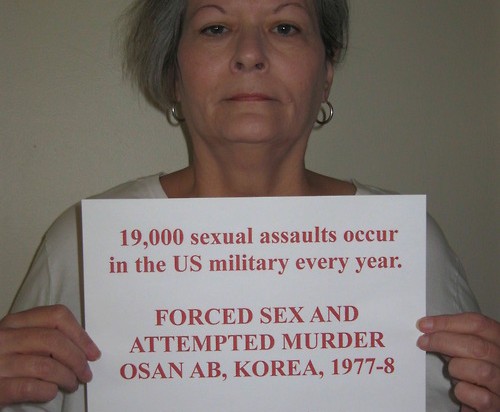
被害はイラクやアフガニスタンにとどまらない。この女性は1970年代に韓国の烏山(オサン)空軍基地(米軍)での強制されたセックスと殺人未遂の被害を訴えている。彼女によれば、米軍内では毎年19,000件の性暴力事件が起こっている。

駐留部隊:米女性兵士の3割、軍内部でレイプ被害

米英軍主導の侵攻から20日で10年を迎えるイラクや国際部隊の駐留が続くアフガニスタンに派遣された米女性兵士延べ28万人の3割以上が、上官らから性的な暴行を受けていたことが分かり、米国内で「見えない戦争」と問題視されている。連邦上院の軍事委員会で13日、「軍内性的トラウマ(MST」と呼ばれる心的ストレスに関する公聴会が初めて開かれた。新たな被害を恐れ沈黙を余儀なくされてきた被害者は「風穴が開いた」と歓迎している。

カリフォルニア州図書館調査局が昨年9月に発表した実態調査によると、イラクとアフガニスタンに派遣された女性兵士の33.5%が米軍内でレイプされ、63.8%が性的いやがらせを受けたと回答した。国防総省も問題を認めている。軍内での性的暴力は2010年だけで、男性の被害も含め推計1万9000件にのぼる。

上院公聴会で議長を務めたバーバラ・ボクサー議員は「被害申告が出ているのは17%にすぎない」と指摘。「この問題の公聴会を開くのに10年もかかった。変革の第一歩だ」と意義を強調した。

イラク戦争中の03年にクウェートに派遣された前後に米国内基地で上官から性的暴力を受けたコーリン・ブッシュネルさん(39)は、公聴会をインターネットの生中継で見ながら「草の根運動で長年取り組んできたことがようやく公に明るみに出た」と興奮した。証言する予定だったが心的外傷後ストレス障害(PTSD)のため断念。議長の言葉に救われた思いがした。

クウェート派遣前に男性上官からレイプされ、帰還後に女性上官から性的暴力を受けた。「上官を訴えても自分を助けてくれる人がいると思えなかった」。精神的なバランスを崩し、06年に退役。2人の子供がいる家には帰れず、5年近くホームレス生活を続けた。「自分が恥ずかしく、行く場所がなかった」

05年のイラク派遣中に変死した女性米兵ラベナ・ジョンソンさんの両親が、自殺と断定した軍に「殺害された」と異議を唱えていることを知った。ジョンソンさんの遺体には、殴られ、レイプされたと見られる痕が残っていた。下士官時代のつらい記憶と重なり「彼女の無念を伝えるのが使命」と感じた。昨年夏から3カ月、全米12州の退役軍人組織を巡る行脚に出た。

退役軍人庁の11年の統計によると、ホームレスの女性退役軍人のうち39%が軍内性暴力の被害者だ。市民団体「女性兵士行動ネットワーク」によると、10年に退役軍人庁のPTSD認定基準が緩和されたが、MSTは申請の32%しか認められていない。全体平均は53%だ。

米国防総省は1月、直接戦闘地域への女性派遣を禁ずる規定の撤廃を発表した。ブッシュネルさんは女性の戦闘任務参加を歓迎しつつ、「今ですら性暴力の告発は難しい。最前線で公正な判断ができるのだろうか」と不安を語った。【ロサンゼルス堀山明子】

毎日 2013.3.19

2012/05/03

[動画] ドイツ軍の慰安所

自分はドイツ語が分からないので、この動画の内容も来歴もよく分からない。グーグル・ビデオにある解説もドイツ語なのだが(動画はYouTubeのものと差し替えた)、幸いドイツ語と英語は、日本語と韓国語のように機械翻訳の相性がいいので、一旦機械が英語に訳した物を日本語に直してみた。例によって、元のドイツ語の解説を一番下に転記しておいたので、正確を期する場合はそちらを参考にしていただきたい。

※ グーグル・ビデオの解説と、ドイツ公共放送連盟 ADR の番組紹介を日本語に訳して下さった方がおられます。本文を、提供して頂いた訳文と差し替えました。なお、翻訳者から、ポーランドやウクライナが戦後まもな共産主義の検閲下(ナチスからの解放というプロパガンダの下)に入ったことも頭に入れておくべきとのアドバイスも頂きました。 (2013.5.28)


ドイツ軍の「慰安所」買春事情については、これまでにも何度かお伝えしているが、最近ではアメリカを舞台に日本軍慰安婦問題をホロコーストと結びつけるキャンペーンが盛んになってきているので、そろそろ日本人自身がこの問題を客観的に考えられるよう情報をまとめた方がいいのかもしれない。左上の写真は、ドイツ軍がフランスに開設した「慰安所」とされている。

なお、ドイツに学べ学べと言うアメリカ人の多くは、ドイツ軍の売春宿の存在を知らないか無視しているが、ドイツ政府はこれらの女性に何の補償も行なっていない。ドイツには慰安婦は存在したが、慰安婦問題は存在しない。


略奪品としての女性 ― 国防軍と売春

ポズナニ出身(訳注:ポーランドの都市)のマリア・K ー 国防軍のための強制売春の犠牲者1940 年のあとナチス当局は軍隊の売春宿の設置を開始した。女性は「モノ(Materialの訳)」と見なされ、無理矢理、占領地域や強制収容所で徴募(rekrutieren の訳)された。
彼女たちは今日までどこにおいても犠牲者としては認められていない。「ナチス親衛隊の男たちがやってきて、美しい女性たちを集めた。彼らはいった―前線で兵士の世話をするのだ」そう話すのは、ウクライナのSkadowsk(訳注:黒海の港町)出身のおばあさんNina Michailowna だ。彼女が描写したことは、第二次世界大戦の歴史にある陰鬱で人間軽視の側面のなかに数えられる。前線において規制の必要があったことは、1940 年以降担当当局にとって、明白だった。数千人もの兵士たちが病気に感染し、軍隊は数ヶ月以上、気晴らしをすることがなかった。その結果として軍当局は売春宿を設置することを始めたのである。

・番組データ
Frauen als Beute - Wehrmacht und Prostitution
(Titel der englischen Fassung: "Women as Booty")
Produktion: D 2005, Aquino Film - WDR - Erstsendung: 12.01.2005 (ARD) - 43 Minuten
Tomas Gaevert&Martin Hilbert による2005 年テレビ放送ドキュメンタリー作品 http://www.thomas-gaevert.de/

Frauen als Beute - Wehrmacht und Prostitution

Maria K. aus Posen - eines der Opfer der Zwangsprostitution für die deutsche Wehrmacht. Nach 1940 begannen die NS-Behörden mit der Einrichtung von Militärbordellen. Die Frauen galten als “Material”, wurden mit Gewalt in besetzten Gebieten oder in Konzentrationslagern rekrutiert. Als Opfer sind sie bis heute nirgends anerkannt. “Die SS-Männer kamen und suchten sich die schönen Frauen aus. Sie sagten - für die Front, die Soldaten zu versorgen.” Das erzählt Nina Michailowna, eine alte Frau aus Skadowsk in der Ukraine. Was sie beschreibt, gehört zu einem besonders finsteren und menschenverachtenden Aspekt der Geschichte des Zweiten Weltkriegs: dem Missbrauch von Frauen in deutschen Militärbordellen. Ab 1940 war den zuständigen Behörden klar, dass es an der Front Regelungsbedarf gab. Tausende von Soldaten infizierten sich mit Krankheiten und standen oft über Monate der Truppe nicht zur Verfügung. Daraufhin begannen die Militärbehörden, eigene Bordelle einzurichten..

Google Video (リンク切れ)

ARD(放送)による番組紹介

「SS(ナチスの親衛隊)がやってきて美しい女性を探していたんだよ-前線で兵士の世話をするためにね」そう話すのは、ウクライナのSkadowsk 出身のおばあさんNina Michailowna だ。

彼女が描写したのは第二次世界大戦における歴史の特に陰鬱で人間を軽視した一つの側面-ドイツの軍隊の売春宿での女性への暴行・陵辱である。

前線において規制の必要があるのは1940 年から当局にとってははっきりしていた。何千もの兵士が性病に感染しており、部隊は何ヶ月も使い物にならなかった。それゆえ軍当局は、自らの売春宿を作り始めた。そのコントロールのために司令部の医師と現地の軍管理当局が割り当てられた。その措置が始まったフランスでは、国防軍が現存の体制を担った。このことは多くのフランスの売春婦にとって、そのとき以来、最も厳しい監視もしくは収容所への移送にさらされることを意味していた。

東ヨーロッパの占領地域では、状況はさらに著しく激しいものであったーここでは軍の売春宿へ女性を徴募(rekrutieren の訳)するためにますます暴力が用いられたのだ。

ほかにもいろいろある中で、新しい女性への絶えず増えていく需要を満たすために恣意的な逮捕、警察の手入れ、収容所への抑留などが行われた。

その際、該当女性は「モノ」と見なされ、それは感染源の監視のためにある。「人種恥辱(罪)」(訳注:Rassenschandeーアーリア人と非アーリア人の間の性的関係を示すナチスの用語)との非難を避けるために、ドイツ当局はたとえば、売春宿にいるポーランド人を「人」ではなく「モノ」と規定した。たいていの場合命を助けることができるという偽りの約束の下で、強制収容所でも女性は募集された。

今までただ断片的な調査があっただけであり、軍の売春宿やそこに収容された女性の運命についてはいくつかの少ない目撃証言しかなかった。この犯罪的な行為の犠牲者は、一生涯ずっとその経験を抑圧することを試みてきた。

ポーランドとウクライナ出身の生存者が、その沈黙を破った。彼女たちは、何を彼女が経験し、観てきたかを報告している。彼女たちは強制売春婦の打ち続くいばらの道が、並々ならぬ苦渋のものであったことをも語っている。彼女たちは自国の人々の助けも全く見つけることができなかったばかりか、事態は全く逆なのである。姦淫に対する伝統的な侮蔑の感情が、多くの場合、敵方への協力の嫌疑となった。軍の売春宿を生き残った女性たちは、裏切り者と断定され殺害された。そのこともあって、彼女たちの歩んだ人生の解明はこんにちまで大変難しいものになっている。彼女たちはこんにちまで、どこにおいても犠牲者としては認められていない。

Rassenschande
http://en.wikipedia.org/wiki/Rassenschande
英語
http://en.wikipedia.org/wiki/German_military_brothels_in_World_War_II
http://en.wikipedia.org/wiki/German_camp_brothels_in_World_War_II
Spiegel 英語版
http://www.spiegel.de/international/germany/concentration-camp-bordell
os-the-main-thing-was-to-survive-at-all-a-632558.html

"Die SS-Männer kamen und suchten sich die schönen Frauen aus. Sie sagten - für die Front, um die Soldaten zu versorgen." Das erzählt Nina Michailowna, eine alte Frau aus Skadowsk in der Ukraine.

Was sie beschreibt, gehört zu einem besonders finsteren und menschenverachtenden Aspekt der Geschichte des Zweiten Weltkriegs: dem Missbrauch von Frauen in deutschen Militärbordellen.

Ab 1940 war den zuständigen Behörden klar, dass es an der Front Regelungsbedarf gab. Tausende von Soldaten infizierten sich mit Geschlechtskrankheiten und standen oft über Monate der Truppe nicht zur Verfügung. Daraufhin begannen die Militärbehörden, eigene Bordelle einzurichten. Für deren Kontrolle wurden Kommandanturärzte und örtliche Militärverwaltungen zuständig gemacht. In Frankreich, wo mit diesen Maßnahmen begonnen wurde, übernahm die Wehrmacht bestehende Etablissements. Für viele französische Prostituierte bedeutete dies von nun an strengste Überwachung oder den Abtransport in Internierungslager.

In den besetzten Gebieten Osteuropas war die Situation noch erheblich radikaler: Hier wurde zunehmend Gewalt angewendet, um Frauen für Militärbordelle zu rekrutieren. Willkürliche Verhaftungen, Razzien und Deportationen dienten unter anderem dazu, den stets wachsenden Bedarf nach immer neuen Frauen zu decken. Die Betroffenen galten dabei als 'Material' und zu überwachende Ansteckungsquelle. Um dem Vorwurf der 'Rassenschande' vorzubeugen, legten die deutschen Behörden etwa fest, dass Polinnen in Bordellen 'Sachen' und nicht 'Personen' seien. Auch in KZs wurden Frauen angeworben, unter der zumeist falschen Versprechung, damit das eigene Leben retten zu können.

Bisher gab es nur bruchstückhafte Recherchen und einige wenige Augenzeugenberichte über die Militärbordelle und die Schicksale der Frauen, die dort interniert waren. Die Opfer dieser Verbrechen haben zeitlebens versucht, das Erlebte zu verdrängen.

Überlebende aus Polen und der Ukraine haben das Schweigen gebrochen. Sie berichten, was sie erlebt und beobachtet haben. Sie erzählen auch davon, dass der Leidensweg der Zwangsprostituierten ein besonders bitterer war. Sie fanden auch bei den eigenen Landsleuten keinerlei Hilfe, ganz im Gegenteil. Zur traditionellen Verachtung gegenüber Huren kam in den meisten Fällen noch der Verdacht der Kollaboration. Viele Frauen, die das Militärbordell überlebt haben, wurden als angebliche Verräterinnen umgebracht. Auch deshalb stellt sich die Aufklärung ihrer Lebenswege bis heute als außerordentlich schwierig dar. Als Opfer sind sie bis heute nirgends anerkannt.

2012/04/29

米軍批判の比・慰安婦団体と反日に特化する韓国?

フィリピンの支援団体は、米軍の性暴力にも厳しい

先週の水曜日に撮られたこの写真にも見えるように、フィリピンの慰安婦支援団体は反米軍・反基地闘争にも熱心で、元日本軍慰安婦がデモに駆り出されている。正直、慰安婦が政治運動に利用されているという印象も受けるが、プラカードにはこう書かれている。

「アメリカ兵は、今すぐ出て行け!」「STOP 石油目当てのアメリカの戦争と軍事侵略」「我が国の女性と子供に対する強姦を止めろ!」「我が国は君たちの遊び場ではない」
Comfort women hold placards to condemn the Philippine-U.S. joint military exercises during a protest in front of the U.S. Embassy in Manila April 27, 2012. American and Philippine troops waded ashore on Wednesday in a mock assault to retake a small island near disputed areas in the South China Sea, an exercise expected to raise tension with rival claimant China.

2012年4月27日、マニラにある米国大使館前で行われた抗議活動で、慰安婦が米比合同軍事演習を批判するプラカードを掲げている。水曜日、米軍とフィリピン軍の兵士たちが、奪還作戦を仮想して紛争海域の近くにある南シナ海の小島に上陸した。この演習は紛争の相手国である中国との緊張を高めると見られている。
ロイター 2012.4.27

プラカードから見ると、抗議はガブリエラ女性党やフィリピンの慰安婦支援団体リラ・ピリピーナが主導したものらしい。慰安婦たちが政治運動に取り込まれているにしても、同じような建前を取りながらその実反日運動に狂奔する韓国の支援団体と比べ、フィリピンの支援団体はより純粋に「女性の人権」や「戦争と性暴力」をテーマに活動しているような印象を受ける。少なくとも、彼女たちからは反日色は感じられない。反基地闘争といえば、日本の運動家も同じで、彼女たちは沖縄の米兵の性暴力は本質的に日本軍による性暴力、すなわち慰安婦問題と同じと主張する。例えば、一年半前に開かれた女性戦犯法廷10周年シンポジウムには沖縄から宮城晴美が参加して「沖縄の女性が独自に性暴力を断ち切ることはもはや不可能...米軍基地の撤去を求めている」と訴えている。

4年前に沖縄で米兵が強姦事件を起こした時も、ガブリエラ女性党は「米軍の存在が女性と子供にとって危険であることを再び証明した」との声明を発表している(この時の被害者はフィリピン人)。

糸数けいこ参議院議員は、水曜デモ千回記念の企画で
米軍による性暴力問題を訴えた(2012年)


韓国の慰安婦支援団体といえば挺対協だが、彼女らもルーツはフェミニスト系。体制批判も行なっていた。その常任代表であるユン・ミヒャンの夫(金三石)には北のスパイとして逮捕歴があり、現在でも挺対協は北の(官製?)団体と共闘したりしているから、やはり親米保守より反米左派に毛並みは近いのだろうが、米国など国際社会の圧力を使って日本を追い詰めようという作戦を取る彼女たちは、そのせいか反米闘争には消極的であるようだ。

実は、彼女たちは(米軍)基地売春婦も運動に取り込もうとはしている。早くから、基地売春婦の問題を無視したまま日本軍慰安婦の問題だけ騒いでいるのはおかしいという批判があったからかもしれない。もっとも、それを指摘した大学教授(キム・ヨンフン)は「被害ハルモニ」を娼婦と同列に扱ったとして挺対協から辞職を要求された

慰安婦の前で謝罪に追い込まれた李栄薫教授(2007年)
日本軍慰安婦問題を他の問題と同列に扱わせない韓国


しかし、挺対協は米軍基地売春婦の問題を取り上げるようにはなったものの、アメリカ大使館の前ではデモは行わない。あろうことか、日本大使館前に「被害者」を呼んで対日糾弾デモ(水曜デモ)に参加させているのである。

なぜ挺対協は反米デモを行わないのか?アメリカの議員たちの協力を頼みにしている彼女たちにとって、反米的な活動はしたくないという理由の他に(日本の進歩的議員たちは反日運動に寛容なのだが・・・)、下に見えるように日本軍慰安婦制度を「世界に類を見ない凶悪な犯罪」だと主張する彼女たちは、他国の同種の問題に埋没して「日本軍性奴隷制度」の残虐性が希薄化するのを警戒しているのかもしれない。

This is an atrocious crime,unparalleled in the world. This is indeed "slavery" and "deportation", and an integral part of the national extinguishment policies of the Japanese colonial government, enforced in Korea in the 1930's and the 1940's.

これは世界に類を見ない凶悪な犯罪であった。これは正に「奴隷制」と「移送」であり、日本植民地政府が1930年代から40年代に朝鮮に課した国家的抹殺政策の必須の部分であった


2012/04/01

元大本営参謀の語った進駐軍の性

失われるのは惜しいと思うので・・・。

高橋は旧陸軍出身、大本営参謀等を歴任。これは2001年山形県民会館での講演。
進駐軍兵士による治安撹乱

ただその翌日から大変だったのです。まァ、ひとつ言いますとね。一番われわれの頭を悩ましたのは、兵隊たちは日本の婦女子をまるでケダモノ扱いのように、引っ張り込んで強姦ですよ、昼日中から。この訴えがわれわれの機関に毎日来るんです。一日に何件も来るんです。言ってこれない人、泣き寝入りの人もいるんです。親子であの黒人兵たちのために被害を受けた人たちも何組もあるんです。これにはホトホト困りました。負け戦というものはこういうものかなと。それで有末中将はアイケル・バーガー中将、第八軍参謀長のバイアス少将なんかにいくら掛け合っても「まァまァ、もうしばらく我慢しろ。彼らはジャングルの中から校庭のキャンパスに出てきたようなものだから、しばらく我慢してくれ。われわれの方でもよく取り締まる」。こう言いながら、あとが断たない。他のことはさることながら、この問題には非常にわれわれは苦労をいたしましたし、残念無念。

2010/12/21

I didn't think of Iraqis as humans【イラク】現代の金子安次


イラク戦争の狂気。

英語版のウィキペディアの慰安婦の項目には金子安次の証言 "The women cried out, but it didn't matter to us whether the women lived or died. We were the emperor's soldiers.(女が泣こうが関係なかった。我々は天皇陛下の兵士だったから)"が引用されているが、彼の証言の信憑性は置くにしても、戦場の非日常性はどの時代にも共通なのだろう。


'I didn't think of Iraqis as humans,' (自分はイラク人を人間だとは思っていなかった) says U.S. soldier who raped 14-year-old girl before killing her and her family

An Iraq War veteran serving five life terms for raping and killing a 14-year-old Iraqi girl and killing her parents and sister says he didn't think of Iraqi civilians as humans after being exposed to extreme warzone violence.

Steven Green, a former 101st Airborne soldier, in his first interview since the 2006 killings, claimed that his crimes were fuelled in part by experiences in Iraq's violent 'Triangle of Death' where two of his sergeants were gunned down.

He also cited a lack of leadership and help from the Army.

'I was crazy,' Green said in the exclusive telephone interview from federal prison in Tucson, Arizona. 'I was just all the way out there. I didn't think I was going to live.'

Green talked about what led up to the March 12, 2006, attack on a family near Mahmoudiya, Iraq, that left him serving five consecutive life sentences.

The former soldier, who apologised at sentencing for his crimes, said he wasn't seeking sympathy nor trying to justify his actions - killings prosecutors described at trial in 2009 as one of the worst crimes of the Iraq war.

But Green said people should know his actions were a consequence of his circumstances in a war zone.

'If I hadn't ever been in Iraq, I wouldn't be in the kind of trouble I'm in now,' Green said. 'I'm not happy about that.'

Green was discharged with a 'personality disorder' before federal charges were brought against him.

Prosecutors sought a death sentence, but a federal jury in Paducah, Kentucky, opted for five life sentences on charges including the rape and murder of 14-year-old Abeer Qassim Al-Janabi and the shooting deaths of her mother, father and younger sister.

Four other soldiers were convicted in military court for various roles in the attack. Three remain in military prison.

Green is challenging the Military Extraterritorial Jurisdiction Act, which allows the federal government to charge an American in civilian court for alleged crimes committed overseas. He was the first former soldier convicted under the statute. The U.S. 6th Circuit Court of Appeals has scheduled arguments for January 21.

Green is challenging the constitutionality of that law, saying it gives the executive branch too much leeway over whom to prosecute. Prosecutors say the law should be upheld.

'I've got some hope, but I'm not delusional about it,' said Green, now 25. 'I hope it works. But, whenever they give you multiple life sentences, they're not planning on letting you out.'

Green didn't testify at trial. During sentencing, he apologized and said he expects to face 'God's justice' when he dies.
Abeer Qassim al-Janabi, Green's 14-year-old victim, whose parents and sister were also murdered in the attack. Green said deaths of two of his colleagues had 'messed him up real bad'

Abeer Qassim al-Janabi, Green's 14-year-old victim, whose parents and sister were also murdered in the attack. Green said deaths of two of his colleagues had 'messed him up real bad'

A 19-year-old high school dropout from Midland, Texas, Green joined the Army after obtaining his high school equivalency diploma from a correspondence school.

He said signing up was easy, born of a sense of duty to defend his country and the opportunities that offered.

'I thought I'd be neglecting my duty if I didn't,' Green said. 'You've got a career, you've got a job. It gives you opportunities to do things with your life.'

The military placed Green with the Fort Campbell-based 101st Airborne. Upon arriving in Iraq, Green said, his training to kill, the rampant violence and derogatory comments by other soldiers against Iraqis served to dehumanise that country's civilian population.

A turning point came on December 10, 2005, Green said, when a previously friendly Iraqi approached a traffic checkpoint and opened fire.

The shots killed Staff Sgt. Travis L. Nelson, 41, instantly. Sgt. Kenith Casica, 32, was hit in the throat. Casica died as soldiers raced him aboard a Humvee to a field hospital.

Green said those deaths 'messed me up real bad.'

The deaths intensified Green's feelings toward all Iraqis, whom soldiers often called by a derogatory term. 'There's not a word that would describe how much I hated these people,' Green said. 'I wasn't thinking these people were humans.'

Over the next four months, Green sought help from a military stress counsellor, obtaining small doses of a mood-regulating drug - and a directive to get some sleep before returning to his checkpoint south of Baghdad.

In the interview, Green described alcohol and drugs being prevalent at the checkpoint. Green said soldiers there frequently felt abandoned by the Army and were given little support after the deaths of Casica and Nelson.

Spc. James P. Barker of Fresno, California, testified that he pitched the idea of going to the al-Janabi family's home to Sgt. Paul E. Cortez of Barstow, California, who was in charge of the traffic checkpoint.

Green, who talked frequently of wanting to kill Iraqis, was brought along.

Cortez testified that Barker and Green had the idea of having sex with the girl and that he didn't know the family would be killed.

Green, then a private,saidhe had 'an altered state of mind' at the time. 'I wasn't thinking about more than 10 minutes into the future at any given time,' Green said. 'I didn't care.'

At the Iraqi home, Barker and Cortez pulled Abeer into one room, while Green held the mother, father and youngest daughter in another.

Pfc. Jesse V. Spielman, of Chambersburg, Pennsylvania, stood guard in the hall. As Barker and Cortez raped the teen, Green shot the three family members, killing them.

He then went into the next room and raped Abeer, before shooting her in the head. The soldiers lit her remains on fire before leaving. Another soldier stood watch a few miles away at the checkpoint.

Since his sentencing on September 4, 2009, Green has been attacked at the federal prison in Terre Haute, Indiana, and was then transferred to Arizona.

In prison, Green converted to Catholicism and has corresponded with a nun in Louisville about his faith.

Green described prison life as a 'lonely existence' and said other inmates consider those convicted of sex offenses among the lowest, making life 'hazardous' among the general prison population.

For Green, each day is just a matter of getting through 24 hours so he can do it all again the next day. Meanwhile, he lives with memories of the attack that took away the Iraqi family.

'If I thought that was an OK thing now, I wouldn't be much of a human being,' Green said.

Mail Online 20th December 2010