ラベル ka-海外の報道 の投稿を表示しています。 すべての投稿を表示

2014/09/12

NYT ラムジー記者 「歴史家は日本が数千の女性を強制した点で合意」

ラムジー記者より
間違いを指摘出来ない日本人記者が問題か

朝日新聞が戦時性奴隷の存在を裏付ける広範な証拠があると書いているとNYTが報じたことについて、マリコ・イノウエ、ヒサコ・ウエノ記者をツイッターで非難したが、記事を書いたのは台湾駐在のAUSTIN RAMZY記者である。よって話を歪めたのは彼かもしれない(もっともそれを許した責任は、イノウエ、ウエノ両記者にあるはず)。自分の知る限り、朝日新聞がそんな事を書いたという事実はない。「戦時中、日本軍兵士らの性の相手を強いられた女性がいた事実を消すことはできません」という分かり切った事は書いていたが。

ラムジーは、朝日新聞を批判するグループを右翼メディアと政治家(right-wing news media and politicians)と呼び、朝日新聞を日本で最も傑出したリベラルの代弁者の一つ(prominent liberal voices)と呼ぶ。こういう不公平はいけない。朝日を傑出したリベラルと呼ぶなら、産経も傑出した保守と呼んでやらねば公平ではない。

ラムジーは、この様に言う。

most historians agree that Japan forced thousands of women to work in a network of wartime brothels (殆どの歴史家は日本政府が何千もの女性に戦時売春宿ネットワークで働くことを強制したということについて合意している)

こうした誤解を日本(系)人記者が正せないのはやはり問題だろう。

Japanese Newspaper Retracts Fukushima Disaster Report and Fires Editor

By AUSTIN RAMZY

TAIPEI, Taiwan — The Asahi Shimbun, Japan’s second-largest daily newspaper, retracted an influential news report on the Fukushima nuclear disaster on Thursday after weeks of criticism from other news organizations.

The move, which included an apology, came a month after the newspaper retracted a series of articles on another hot-button issue: the women from Korea and elsewhere who were forced by Japan to serve in military brothels during World War II. The articles used reports about the practice by one Japanese man whose particular accusations have been widely discredited.

Japan acknowledged in a landmark apology in 1993 that the women had been forced to work in the brothels.

The retractions occurred amid an outpouring of angry accusations that the newspaper had damaged Japan’s international reputation with the mistaken articles, especially those on the Imperial Army’s role in forcing so-called comfort women to serve in military brothels during World War II. The intensity of the attacks, particularly from right-wing news media and politicians, has led many to warn of a politically motivated campaign to undermine the newspaper, one of Japan’s most prominent liberal voices.

“We hurt readers’ trust in our reports,” Tadakazu Kimura, Asahi Shimbun’s president and chief executive, said at a news conference Thursday evening.

Mr. Kimura announced that he was dismissing Nobuyuki Sugiura, Asahi Shimbun’s executive editor, and would punish other editors involved in the Fukushima reporting. Mr. Kimura said he would decide whether he himself would resign after carrying out a “drastic restructuring plan.”

In May, the newspaper cited testimony by the Fukushima plant manager Masao Yoshida in reporting that about 650 workers disobeyed orders and fled the Fukushima Daiichi nuclear power plant at a critical moment during the disaster in 2011.

In recent weeks other Japanese news organizations have reported on Mr. Yoshida’s testimony. Reports from The Mainichi Shimbun, The Yomiuri Shimbun and The Sankei Shimbun, three other leading newspapers, and the Kyodo News agency portrayed his comments differently, saying the exodus was the result of miscommunication.

Mr. Yoshida, who is regarded by many in Japan as a hero for preventing a wider disaster, asked before he died last year that the contents of his interviews not be made public. The government, however, released the text of his interviews on Thursday, saying that the release was necessary to clarify the public record.

“Only a part of the record of Mr. Yoshida’s testimony has been picked up and reported by several papers,” said Yoshihide Suga, the top government spokesman. “His original concern that his story would develop a life of its own without verification came to be realized. We think it would lead to a result that is against his will if we don’t disclose it.”

Since the Fukushima disaster, the liberal Asahi Shimbun has campaigned against nuclear power in its editorial pages, saying it regretted its earlier support. The conservative Yomiuri Shimbun has been critical of Asahi’s coverage, saying its report on Mr. Yoshida’s testimony “caused serious misunderstandings among the international media.”

The Asahi Shimbun’s coverage of another delicate topic has also come under scrutiny in recent weeks. Last month the newspaper retracted 16 articles, the first published in September 1982, citing a Japanese Imperial Army veteran who said he had rounded up Korean women to serve as sexual slaves during World War II.

While most historians agree that Japan forced thousands of women to work in a network of wartime brothels, some have long questioned the particular evidence given by Seiji Yoshida, a soldier who later became a writer. Shinzo Abe called him a “con man” in a speech in November 2012, shortly before taking office as prime minister. (Japan did not use Mr. Yoshida’s statements in developing the country’s formal apology to the women.)

Mr. Abe, a nationalist who has vowed in the past to end what he calls a masochistic view of Japan’s history, told a radio program on Thursday that he would not comment directly on The Asahi Shimbun. But he said, “I think it is true that, by the false reporting on comfort women, for example, a lot of people have suffered, and Japan was discredited in international society,” the broadcaster NHK reported.

The Asahi Shimbun said that it sent reporters to Jeju Island in South Korea in April and May to try to corroborate Mr. Yoshida’s claims of his personal involvement in rounding up women to serve as sexual slaves, but that after interviewing about 40 people, they were unable to do so. Mr. Yoshida died in 2000 and had declined to help in previous efforts to investigate his claims, the newspaper said.

In February, Mr. Abe ordered an investigation into the government’s apology for the sexual slaves. That effort prompted criticism from China and South Korea, which say Japan has not come to terms with the brutality of its wars against its neighbors. His government has since said it would not revise the apology.

There is broad evidence to support the existence of wartime sexual slaves, The Asahi Shimbun wrote last month in an article questioning whether the retraction of the articles citing Mr. Yoshida was being used to undermine Japan’s apology on the issue.

The newspaper came under further criticism last week after it spiked a column from a well-known contributor, Akira Ikegami, who said that the paper’s retraction of the comfort women articles was too late and did not go far enough, and that the newspaper should apologize. After criticism from readers and members of its own staff, the paper reversed course and published the column.

Makiko Inoue and Hisako Ueno contributed reporting from Tokyo.

2014/04/30

[資料・英語]


フォーブスに掲載されたEamonn Fingletonの記事。

'Disgusting!,' Cry Legal Experts: Is This The Lowest A Top U.S. Law Firm Has Ever Stooped?

Would any self-respecting U.S. law firm represent a client who suggested the Jews deserved the Holocaust? Probably not. As a matter of honor, most law firms would run a mile, and even the least honorable would conclude that the damage to their reputation wasn’t worth it.

Where imperial Japan’s atrocities are concerned, however, at least one top U.S. law firm hasn’t been so choosy. In what is surely one of the most controversial civil suits ever filed in the United States, the Los Angeles office of Chicago-based Mayer Brown is trying to prove that the so-called comfort women – the sex slaves used by the Imperial Japanese Army in World War II – were no more than common prostitutes.

The suit has been filed on behalf of two Japanese-Americans, Michiko Shiota Gingery and Koichi Mera, plus a corporation called GAHT-US (a bizarre entity whose involvement must be a particular embarrassment to any decent person at Mayer Brown – more about this in a moment). At the center of the controversy is a Korean-funded memorial to the comfort women which was recently established in a park in Glendale, California. The suit suggests that the above named Japanese-Americans will suffer “irreparable injury” from “feelings of exclusion, discomfort, and anger” if the memorial is not removed.

This is, of course, the functional equivalent of suggesting that German-Americans suffer “irreparable injury” from memorials to the Jewish Holocaust. Although the suit has so far received little attention in the mainstream American press, it has provoked outrage elsewhere, not least in London where the noted British commentator Robert Fisk has provided a particularly trenchant account. It has also sparked a firestorm among legal bloggers. Here, for instance, is a comment from Ken White, a prominent Los Angeles-based criminal attorney: “I cannot remember a lawsuit that so immediately repulsed and enraged…..This lawsuit is thoroughly contemptible. It should fail, and everyone involved should face severe social consequences.”

Strong words but White’s assessment is hard to fault. The indisputable historical record, after all, shows that countless women who served in the Imperial Army’s brothels were innocents seized at gunpoint in Japan’s erstwhile colonies and forced into sexual servitude. (Yes, of course, not all were innocents. The army’s first recourse was to professional prostitutes but even if every prostitute in the empire had volunteered for such a hellish assignment, there were far too few of them to serve the army’s needs. Japan’s war was vast, spread as it was across six time zones and involving at least six million men, most of whom seem never to have had any home leave. )

On the basis of 27 years of on-the-spot Japan-watching in Tokyo, I can report that Mayer Brown’s suggestion that the facts “remain an active topic of political debate” is sheerest sophistry. There are no two sides to this issue and no decent Japanese citizen I have ever met questions the validity of the comfort women’s allegations. Anyone who does has a manipulative agenda and doesn’t believe a word he is saying.

Even the Japanese government has admitted as much. Japanese Chief Cabinet Secretary Yohei Kono issued a widely publicized statement in 1993 acknowledging that there were “many cases” of agents acting on behalf of the Imperial Army “intimidating these women to be recruited against their will.”

The statement went on tacitly to acknowledge the comfort women’s enslaved status: “In the war areas, these women were forced to move with the military under constant military control and that they were deprived of their freedom and had to endure misery.”

The Kono statement was treated as front-page news by the American press at the time, but was hardly new news. To be sure it had been preceded by a long series of denials in Tokyo, a record taken at face value by an ever naïve American press; but the main allegations had been proved in a Dutch court under Western rules of evidence as far back as 1948. That court, which had been convened in what was then the Dutch East Indies (now Indonesia), had considered allegations that Japanese army officers had forced many Dutch women seized in the Dutch East Indies into sexual slavery. One Japanese military official was executed and eleven other Japanese citizens were sentenced to jail terms. The Dutch went on in 1956 successfully to press the Japanese government to pay compensation to the women, an almost unheard-of achievement in Western diplomacy (the Japanese establishment has otherwise proved highly successful in stonewalling compensation claims from countless victims of other atrocities). In 1985 details of the comfort women story were published in an official Dutch government history of the war. For more detail on the Dutch side of the story click here.

One of the more striking aspects of the case against Imperial Japan is that so many women of so many nationalities — Korean, Chinese, Taiwanese, Filipinas, Burmese, Vietnamese, and Dutch, among others — closely agreed on the details. Not the least telling detail is that though modern Japan had a long previous history of militarism (it had fought several wars in the late nineteenth and early twentieth centuries), allegations of sexual slavery first surfaced in the 1930s. Up to that time Japan had been exemplary in abiding by the Geneva Conventions, including those on the treatment of women. It was a strategy aimed at winning diplomatic and economic acceptance for Japan as a “civilized nation” that was the equal of the then world-dominant Great Powers of the West. The fact that there had been virtually no complaints about Japanese military’s sexual behavior before the 1930s and then such complaints suddenly became a torrent is consistent with aother evidence that Tokyo broke decisively with the Geneva Conventions in the early 1930s in a new policy of no-holds-barred warfare.

As for GAHT-US, its full name is the Global Alliance for Historical Truth-US. If that sounds impressive, its genesis is less so. It was incorporated as recently as February 6 and uses a UPS office as its official address. The really controversial part is that its name has evidently been chosen so it would be confused with a very different entity, the Global Alliance for Preserving the History of WWII in Asia. This latter is a long-established, entirely respectable scholarly group founded by Chinese-American professors that is on the other side of the comfort women argument. The first two responses to a Google search today for “Global Alliance for Historical Truth” brought up the Chinese-American entity, thus suggesting that respectable Chinese-American opinion endorses the effort to brand the comfort women as prostitutes.

For the record I reached Michiko Shiota Gingery by phone and asked her whether she really believes the comfort women are lying. In avoiding the question, she argued that the memorial had no place in America and should be located instead in Korea or Japan. This echoed an opinion voiced by other opponents of the memorial but it seems a bit selective. The fact is that ethnic Koreans constitute a significant minority in Glendale and it is not unusual for other ethnic groups to erect monuments remembering past injustices. If Wikipedia is to be believed, there are 45 memorials to the Jewish Holocaust alone in the United States, sixteen to the Irish famine, and six to the Ottoman Turks’ genocide of Armenians.

I emailed the four Mayer Brown attorneys involved in the case – Neil Soltman, Matthew Marmolejo, Ruth Zadikany, and Rebecca Johns – for a comment. I also emailed the firm’s chief executive Paul Theiss. I received no responses. Reached by phone, Soltman referred me to the firm’s public relations officer Bob Harris but Harris also failed to respond.

Should Mayer Brown have taken on this suit? Here is the opinion of the prominent First Amendment attorney Marc Randazza: “Every law firm gets confronted (on a pretty regular basis) with the question: ‘should I put my name on this?’ That soul searching comes into play when you wonder, ‘is this honorable?’ You know when it is, and when it isn’t. I’m not talking about representing a client that you know is guilty — they deserve a defense. I’m not talking about representing a really evil client — because there might be an important legal issue in play. I’m talking about when you do something truly disgusting.”

Why therefore would Mayer Brown, which ranks among America’s top 20 corporate law firms, take on such a case? Beats me but one answer suggested by a commenter at Ken White’s website is probably worth passing on: “Mayer Brown has a heavy practice in Asia…. They are probably either doing this as a favor to a large client, or trying to expand their Asia presence to Japan.”

Update: This commentary has drawn a particularly interesting series of comments and I urge readers to check them out. I am planning a new article to address some of the issues and will post this on Sunday, April 20.

Forbes 2014.4.13

Eamonn Fingleton, Contributor

What's Japan's Guiltiest Secret?: (Hint) It's Not The Comfort Women

For anyone who follows East Asia, here’s a question: what is Japan’s guiltiest secret?

The “comfort women” scandal? The Nanking massacre? Official homage to war criminals at the Yasukuni shrine?

No, no, and no. If by a guilty secret we mean something that Japan really, really wants to sweep under the rug, none of the above comes even close. Japan actually often goes out of its way to publicize these issues: click here for the official Japanese news agency’s account of today’s carefully timed visit by Keiji Furuya to Yasukuni. With Kyodo’s help and the fact that Easter Sunday is, of course, a particularly slow news day in the West, this relative nonentity has made headlines everywhere from the South China Morning Post to the BBC World Service.

We will look more closely at Japan’s attitude to such controversies in a moment. For now let’s note that Japan does have secrets and big ones – secrets it strives with unique ingenuity and success to keep out of the Western media.

Top of the list is something that – at least for those of us who know Japan – is hidden in plain sight: the Japanese auto market. Fifty years after the Tokyo authorities ostensibly began opening to free trade, the Japanese auto market remains one of the world’s most closed. I don’t mean just that Detroit-made cars don’t get a look in. These are, with few exceptions, unsuitable for Japanese roads. But the Detroit Big Three’s subsidiaries in Europe, particularly subsidiaries of Ford and General Motors, make plenty of cars that – in a fair world – should do well in Japan. After all such cars compete, and in many cases compete strongly, against Japanese competition across Europe. They don’t have a prayer against Japan’s non-tariff barriers.

Even more tellingly Volkswagen is a tiny also-ran in Japan, with just 1 percent of the market. Yet Volkswagen is no slouch in other markets and in fact ranks broadly equal to Toyota as the world’s largest auto-maker (the days when that title seemed to be General Motors’s by birthright are gone).

Then there is Renault, which is supposedly (at least if you believe the New York Times and the Wall Street Journal) the senior partner in an alliance with Japan’s second largest automaker Nissan. For more than a decade now Renault chief Carlos Ghosn has been trying to get Renault cars into Nissan showrooms. The last I heard he was even living much of his time in the posh Tokyo district of Azabu in one of the world’s more expensive rental apartments. He has remarkably little to show for his efforts: to the extent that the Renault has established any presence in Japan it is as a make of bicycles. Made under license in Taiwan, Renault bicycles have captured, on an optimistic count, perhaps 1 percent of the Japanese bicycle market!

Of course, umpteen times over the years the problem of Japan’s closed market has been declared solved. Nobuhiko Ushiba, who served as Japan’s ambassador to Washington in the early 1970s, once told reporters: “There is no example in recent history of a nation liberalizing trade policy as fast as Japan.” Meanwhile in 1982, Japanese foreign minister Yoshio Sakurauchi assured a meeting of the GATT that Japan “is one of the most open markets in the world.”

A particularly impressive-sounding assurance came from President Bill Clinton in 1995. Speaking in the White House Briefing Room, with Japanese Trade Minister Ryutaro Hashimoto looking on impassively, Clinton announced that Japan had agreed “to truly open its auto and auto parts markets to American companies.”

He added: “This agreement is specific. It is measurable. It will achieve real, concrete results … we finally have an agreement that will move cars and parts both ways between the United States and Japan. This breakthrough is a major step toward free trade throughout the world.”

It was all empty rhetoric, of course, as Clinton surely knew. The interesting thing is that the American press has never revisited the record, not even the reliably anti-Clinton Wall Street Journal. Anyone who knows the Tokyo news business knows why. The Japanese authorities keep the foreign press on a remarkably tight leash and, with virtually no exceptions, foreign correspondents are induced to censor themselves. As a practical matter, Tokyo wields a panoply of carrots and sticks in controlling what Japan-based foreigners say to the outside world and most long-term foreign residents are overt or covert agents for Japan’s public relations agenda. Foreign correspondents are no exception.

Don’t believe me? Do a Google search. The most important single fact about the Japanese auto market is that for decades the share of all foreign brands combined has been kept to just 4 percent. When did you last read that in the New York Times? It is also worth searching for a statement put out last July by the American Automotive Policy Council itemizing some of the most blatant of Japan’s non-tariff barriers. It received virtually no coverage in the U.S. press.

Yet it is hard to exaggerate the consequences for the global economy. Thanks to assiduous protectionism, the Japanese domestic auto market remains a high-price sanctuary. The huge profits earned there enable Japanese auto makers to invest at a super-fast rate in ever more efficient production technology, all the while pricing aggressively in foreign markets. Nor is the global auto market a small prize. The fact is that autos and auto parts are by far the largest single manufacturing category in world trade.

Now let’s consider the comfort women scandal and other widely publicized manifestations of Japan’s “failure to come to terms with its past.” The first thing to note is that no one alive today had any responsibility for the war, thus everyone has an alibi. For a nation with some real skeletons in its closet, controversy over the war-time past is actually a safe issue and if things become a little too heated the Prime Minister or Emperor can always step in with another apology, thus putting the issue to bed until further notice. Seen in this light there is no point in Tokyo covering up such issues. Quite the contrary. While the foreign press busies itself with the often completely contrived issues of the war-time past, it has less time and energy to delve into issues on which the Tokyo authorities really want to maintain radio silence.

The most obvious indicator that Tokyo has no interest in suppressing the controversies is the behavior of the Japan Times, a semi-official English language newspaper that the Dutch Japanologist Karel van Wolferen has characterized as the Tokyo Foreign Ministry’s megaphone. What is clear is that as most American and British correspondents in Tokyo don’t read Japanese, the Japan Times is the unstated source of many of their reports. A closely related matter is the role of Kyodo, the official news agency whose English-language service follows the same editorial policy as the Japan Times.

On issues that the authorities really want to sweep under the rug, the Japan Times and Kyodo cooperate fully. Besides the auto market issue, another key issue that has traditionally been censored in Tokyo is Japan’s stonewalling on compensation to war victims. In sharp contrast to Germany, Japan has paid virtually nothing to victims of its war crimes – a fact that for decades was kept almost completely sub-rosa in the Western press. (Things have been liberalized somewhat in the last few years, now that most of the victims are dead.)

Forbes 2014.4.20

2014/04/04

[資料・英語] 


この記事は既に下の記事と差し替えられた模様。googleのキャッシュを魚拓にとった。

Objectors expected at council over comfort women statue plan

ARTICLE | TUE, 01/04/2014 - 15:29 | BY PETER LYNCH

Strathfield councillors are expecting petitions from the Japanese community and pleas from Koreans and Chinese at a meeting tonight over a controversial plan to erect a statue in memory of comfort women.

The Japanese government has already described the statue plan as "misguided".

The statue, commemorating World War II women who were forced into sexual slavery, is an emotional issue in Strathfield, which has large Korean and Chinese communities.

While no final decision on its location has been taken, Strathfield has been mentioned in reports - which has led to 500 pro-forma protest letters being received at council's Homebush Road offices from Japese protestors.

Tonight, a petition is expected to be presented for the plan to be abandoned. But council are also braced for strong calls for the statue to be placed in the town centre.

Sydney's Korean and Chinese communities have agreed to pay for it, and maintain it in honour of the 200,000 wlmen and girls forced into sexual servitude by Japanese soldiers during the war.

Strathfield deputy mayor Sang Ok has been at the forfront fo the campaign for a statue, maintaining according to reports that it would send a signal to Japan.

Council oficials, however, are concerned that any offensive or provocative langauge should not be allowed in public places. The Japanese Embassy in Sydney told The Sydney Morning Herald: ''Japan hopes that ethnic and racial minority groups in countries all over the world can coexist in peace, and believes that it is not appropriate for people of various ethnic or racial backgrounds to bring in their differences of opinion on this issue.

''The government of Japan understands that the issues of history should not be politicised or be turned into a diplomatic issue. However, on the other hand, while the details of the statue or inscription are not yet clear, Japan believes that the movement is due to a lack of understanding of our position and efforts towards comfort women, and is not compatible with Japan's position.''

The pro-forma letters appearing in Sydney at council and media outlets said: ''Recently, I have heard the news that Chinese and Korean communities in Australia have set up an Anti-Japanese War Crimes Alliance and that they are planning to erect a statue of 'comfort women' (prostitutes at the war) [sic] in Sydney and Strathfield.''

It went on to claim mother countries had done the same to women, and asked authorities to reject the statue plan.

The Friends of Comfort Women in Australia said they would suppose the erection of a statue to honour the comfort women.

The group believe the women have been forgotten and like the soldiers who died on the Sandakan Death March in World War II, a commemorative satue should be erected.

Our Strathfield 2014.4.1


Scores turn out to protest over comfort women statue plan as the international press look on

ARTICLE | TUE, 01/04/2014 - 15:29 | BY PETER LYNCH

It was one of the biggest protests seen in Strathfield in years. And it was all conducted under the watchful eye of the international press.

When councillors were asked to consider a petition against the idea of a statue commemorating Korean, Chinese and Australian "comfort women" used by the Japanese army during the second world war, some 140 Koreans, Chinese, Australian and Japanese protestors turned up to try and influence their decision.

Five Japanese news organisations were reportedly on hand to watch the deliberations, including Kideki Yoshiumura, bureau chief of the Sankei Shimbun, who had flown in from Singapore specially to cover the proceedings.

"It's a big story in Japan," he told the Scene outside the Town Hall, opened to provide more space to house the protestors.

Another Japanese man from Chatswood, who asked to remain anonymous, said he had handed council 8,900 names garnered from his Facebook page in just 24 hours, protesting the plans.

Council admitted they had received 500 protest letters in just a few days themselves.

Councillors voted to refer the matter to State and Federal Governments for the official position on such memorials, noting that its Community Strategic Plan upholds strong community consultation and inclusiveness over such matters.

The story started when a Korean and Chinese alliance group suggested a bronze $100,000 statue by Chinese artist Jian Hua Qian be placed on the town square.

The "Three Sisters" was to commemorate the 200,000 women used as sex slaves by the Japanese army during World War II. The Chinese and Korean communities have agreed to pay for it to be cast in bronze, and for its upkeep.

The "comfort women" issue is highly sensitive and controversial among the Japanese, Koreans and Chinese.

Strathfield's deputy mayor and prominent Korean Sang Ok apparently backed the plan, and was quoted in an article in the Sydney Morning Herald.

Last night, he told the Scene he would absent himself from any vote because he had an interest in the issue, maintaining it was up to the council to decide where any statue might be placed.

"Anywhere in Strathfield" was Cr Ok's preferred position.

Others were more forthright, using the open forum at the start of the council meeting to put forward both supporting and opposing views, greeted by load applause from their supporters. It was an emotional, yet dignified debate on matters dating back 70 years.

One particularly poignant speaker for the statue was the daughter of an Australian "comfort woman", Carol Ruff.

Her 91-year-old mother wrote the book 50 Years of Silence, and her story was instrumental in making rape a war crime.

The Japanese government has already described the statue plan as "misguided".

The Japanese Embassy in Sydney told The Sydney Morning Herald: ''Japan hopes that ethnic and racial minority groups in countries all over the world can coexist in peace, and believes that it is not appropriate for people of various ethnic or racial backgrounds to bring in their differences of opinion on this issue.

''The government of Japan understands that the issues of history should not be politicised or be turned into a diplomatic issue. However, on the other hand, while the details of the statue or inscription are not yet clear, Japan believes that the movement is due to a lack of understanding of our position and efforts towards comfort women, and is not compatible with Japan's position.''

The pro-forma letters appearing in Sydney at council and media outlets said: ''Recently, I have heard the news that Chinese and Korean communities in Australia have set up an Anti-Japanese War Crimes Alliance and that they are planning to erect a statue of 'comfort women' (prostitutes at the war) [sic] in Sydney and Strathfield.''

Our Strathfield 2014.4.1 [2]

デイリーテレグラフ。誤解も多いが、それでもなるべく公平に両論併記を心がけている印象。これなら、日本政府がもう少しハッキリとした公式見解を出せば状況は改善するかもしれない。そう思わせる。

Strathfield community divided over proposed tribute to comfort women

CONTROVERSY over a plan to build a statue honouring women forced into sex slavery during WWII boiled over at Strathfield Council last night.

More than 120 people poured into the meeting in response to a proposal to put up the statue in Strathfield honouring the 200,000 ‘comfort women’ — women and girls forced into sexual servitude during war by the Japanese.

The issue has divided Sydney’s Asian communities and yesterday, was criticised as misguided by the Japanese embassy in Australia.

A petition opposing the statue started by Japanese Women for Justice and Peace has already attracted over 10,000 signatures.

Now there are questions over whether the statue plan is simply causing further divisions.

More than 25 per cent of Strathfield’s population have Chinese or Korean ancestry and members of both communities have pushed hard for the statue in Strathfield.

Many comfort women were taken from Japanese occupied areas in Korea and China during WWII as well as other South-East Asian nations including Indonesia and Vietnam.

Last night, councillors allowed speakers from both sides to take the floor including Carol Ruff, the daughter of Jan Ruff O’Herne, a former comfort woman born in Java who in the early nineties spoke out about her experiences.

“We feel that, as you can see here tonight from the meeting, this issue hasn’t really gone away and I think it’s passed down through the families,” said Ms Ruff, who made acclaimed documentary 50 Years of Silence about the book her mother wrote about her life.
“We still feel very strongly. I think what she (Ms Ruff O’Herne) would like to see — apart from a statue in Strathfield — is some recognition from the Japanese government and an apology. That would mean so much, just like when Kevin Rudd said sorry.”

Others argued that raking up events from 70 years ago was not conducive to harmony while some questioned the validity of a statue which would have minimal connection to Australia.

Kohki Iwasaki, who identified himself as Japanese-Australian, said approving the statue would be “synonymous with apartheid” pointing at incidents of racism when a similar statue was erected in America to suggest it would be culturally divisive.

“On it (the statue) is carved a statement that turns all the existence of the Japanese race into a crime against humanity, without realising that it is this very statue that is encouraging yet another crime against humanity,” he told the meeting.

Mr Iwasaki went on to say that the statue contravened UN directives on human rights and would open old wounds.

Why single-out a 70-year-old story of hatred, when we can use that effort to prevent something happening now,” he asked.

“I believe the statue is only going to breed more hatred. If we sow seeds of hatred, what will grow?

After leaving the makeshift chamber to discuss the issue in closed session, the council decided to refer the issue to both the state and federal government and consult its community following the responses.

The plan for the statue arose from the outrage caused in Japan last month, when more conservative elements of the Japanese government said a 1993 apology to the women, mainly of Korean and Chinese heritage, should be watered down.

Japanese Prime Minister Shinzo Abe caused further anger by suggesting many of the women were willing participants, although he later distanced himself from the issue.

Strathfield Council’s deputy mayor Sang Ok this week condemned the Japanese prime minister’s comments and has come out in support of the proposed statue, which would be a version of the one in the US by Chinese artist Pin Hsun Hsiang.

While no official proposal was on the council agenda last night, 120 people turned up in response to the increasing controversy building around the statue. The crowd was so big, it forced the council from its normal chambers and into a bigger hall.

Comfort Women
● Comfort women were women and girls taken from countries occupied by Japan during World War II, including Korea, China, Indonesia, Vietnam, Burma and the Philippines.

● Although the bulk of the women involved were from South-East Asia, some were from Australia and The Netherlands.

● Some claim as few as 20,000 women were involved while others say up to 410,000. Somewhere around 200,000 is the widely accepted figure.

● It is estimated that up to three quarters of comfort women died, with most others left infertile due to sexual trauma.

● It is claimed that the women were often abducted from their homes and promised work in factories or restaurants, before being sent to the ‘comfort stations’.

● Documents from the Japanese Imperial Army suggest that the stations, attached to the military, were set up to prevent the rape of local women by army personnel in order to dispel rising hostility among people in invaded area.

● Despite accepting that the women were coerced in 1993, the Japanese government reneged on their decision in 2007, claiming there was no evidence that the women were seized by force.

2013/09/29

日本人写真家とドイツ人記者のコラボ記事


ドイツ版BBCといったところなのだろうか、ドイチェ・ヴェレに掲載された「慰安婦の悲しい物語」は、ドイツで活動する写真家、矢嶋宰の写真15枚を使った日本軍慰安婦問題のレポートである。この記事はコメント欄で凧さんから教えて頂いた

キャプションを書いたのはSonja Ernst。最初、解説がかなり「巧み」に慰安婦支援団体側の主張に沿って書かれているので、ドイツ人が書いたものではないだろうと思ったが、Sonja Ernstは南アジアや韓国を専門にするフリージャーナリストで、韓国滞在中には中央日報の英字版にも関わったらしい。

記事はアジア女性基金には触れておらず、女性基金を拒否することを条件に韓国政府が渋々提供した財政援助についてだけ触れている。朝鮮人の男に騙されたキム・スンドク(金順徳)も、ここではあたかも日本人に騙されて慰安婦にされたように語られている。アジア太平洋戦争という日本の左翼用語由来(?)の言葉も使っている。


矢嶋の考えは分からないが結果的にプロパガンダの拡散に加担してしまっている
The sad story of the "comfort women"

Ruined lives

Lee Sudan, now 88 years old, used to be a "comfort woman." An estimated 200,000 other girls and young women were forced to "comfort" Japanese soldiers during Asian-Pacific War. "Comfort" is the cynical euphemism the Japanese used; it was really prostitution into which the women were brutally forced.

Japanese war

Most of the prostitutes were from Korea, like Lee Sudan. She was 17 years old when she was kidnapped and taken to China. Korea had been a Japanese colony since 1910. In 1937 the war between Japan and China broke out and started the Second World War in Asia. Japan's greed for power and brutal Asian expansion cast a dark cloud over the entire continent.

Coping with the past

The Japanese photojournalist Yajima Tsukasa took portraits of "comfort women" in China and Taiwan. He lived in a South Korean home, "The House of Sharing," for the women from 2003 to 2006. There he took care of and photographed survivors like Pak Duri, who had been kidnapped and taken to Taiwan. The harsh beatings from the soldiers took a toll on her hearing and made her nearly deaf.

中央日報と縁のある記者だけに、ほぼ韓国側の主張に沿った解説

Sex slaves

The Japanese systematically organized forced prostitution; they set up military brothels on the frontlines. The war crimes that happened there were justified with cynical excuses, for example, that the authorities were trying to prevent mass raping from taking place in the occupied territories. Ji Dori was taken to a military brothel in China a few months before the war ended in 1945.

Bridging gaps

Yajima's grandfather was a soldier in China. He avoided the questions his grandson asked him about the war, so Yajima looked for the answers to his questions later as a photographer. The 39-year-old says he wants to bridge the gap that still exists between Koreans and Japanese.

Gaining trust

"I came as a man, a Japanese man no less, and as a photographer to the House of Sharing," said Yajima. "That was not easy for the women in the beginning. But they let me stay." He listened to and helped the women. Slowly but surely he gained their trust and friendship.

Never-ending torture

Kim Sundeok (left) and Oklyon (right) were sex slaves who survived the torture. Pak was kidnapped by the Japanese military and taken to a military brothel in what is now called Papua New Guinea. The girls and young women there had to be available for the men around the clock. They were raped by up to 40 men each day.

金順徳だとすれば、93年の時点では地元民による詐欺という話だった

False promises

Kim Sundeok(金順徳?) was taken to a military brothel in China at the age of 17. She had fallen for a false recruitment for nurses. The Japanese recruited young Korean women to work in China for a few months to earn a little money. Young women from poor families were looking for means to help their families financially. But their dreams ended with humiliation and violence.

Alone and far from home

Yajima Tsukasa visited Pak Seoun in China. The 93-year-old lives in the north eastern city of Jilin. The Korean woman had been taken to China in 1937 at the age of 20. After Japan's capitulation in August of 1945, the Japanese fled and left the "comfort women" behind. The young women were far away from home, traumatized and penniless.

Still alone

Pak Seoun stayed in China. She was too embarrassed to go back to her family. She married twice but both marriages ended in divorce. Her husbands had been unable to accept her past.

Suppressing the memories

After 1945 the comfort women did not speak of their hardships. The shame was too overwhelming and governments and societies never asked questions - neither in Japan nor in the previously occupied territories. Lee Okseon (left) also kept quiet. She had been taken to China at the age of 16 and stayed there. She started a family and didn't return to Korea until the year 2000.

The end

The year 1991 was an important year for Lee Okseon and other comfort women. Hak-Soon from Korea was the first to break the silence that year. She told her story on TV, which inspired other women to tell their stories, like Lee Okseon. The 82-year-old presented herself on an international stage and became active in the fight for recognition.

Japan should apologize

Comfort women from all over Asia came together. They all had a similar past and also shared the same feelings of anger toward the Japanese government, which to this day has still not officially apologized. Comfort women and others demonstrate each Wednesday in front of the Japanese embassy in Seoul. The 900th demonstration took place at the beginning of 2010.

The clock is ticking

Many of the comfort women remained childless and many fell into poverty. South Korea started offering the victims financial help in the mid-1990s. In China and Indonesia, however, many still live in poverty. The comfort women have started a movement and are demanding compensation from the Japanese government.

Fighting for dignity

Up to 1995, 235 comfort women had come out in South Korea; today there are only 82 left. The clock is ticking for the women, who are now over 80 and 90 years old. They broke the silence nearly 40 years after the atrocities happened to demand recognition and an apology from the Japanese government. Author: Sonja Ernst (sb) Editor: Thomas Baerthlein

2013/07/10

「否定派に拍手、日本政府も認めてるのに」--グレンデール市


韓国系のメディアが昨日「韓国人の力を見せよう」と呼びかけていたが、まさか日本人が大勢詰め掛けるとは思わなかった(写真では、韓国人と日本人の区別はつかないが)。今まで大人しかった現地の日本人や日系アメリカ人にも、ようやく動きが出て来たということか?

Levine記者は、「否定論者」から300通以上のメールをもらったと言っている。しかし、彼女はこうも言っている。「向こう側は性奴隷制はでっち上げだと言うけど、日本の外務省は女性たちが売春を強制された事を認めている(Opponents say sex slavery is a fabrication, but Japanese Ministry of Foreign Affairs has admitted that women were forced into prostitution)」。一般の日本人がいくら説明しても、彼女には通じなかったようだ。日本政府が事実と認めているのだから、何を言っても「日本の極右」の戯言としか思われないのである。

”彼らは否定するが、日本の外務省も認めている”

やはり橋下大阪市長が言うように、何を認め何を認めていないのか、日本政府が明確化しなければ、この問題は永遠に埒が明かないだろう。


最後のやり取りは、こう。「今の人たち(日本人)はまだ起こった事を否定してるの?(大笑い)」「そうよ。ここ数日で300通以上のメールをディナイアー(否定者)たちから受け取ったわ。議会の会議室も敵で一杯」

「公聴会で韓国人の力見せなければ」

グレンデール慰安婦記念碑、今日デザイン審議会開催日本人妨害しようと注目

「グレンデール慰安婦記念(追慕?)モニュメント建立に力を貸して下さい「グレンデール市が『慰安婦』記念平和の少女像」の除幕に先立ち、9日デザイン審議公聴会を開催く予定だ。

フランク・キンテロ市会議員とカリフォルニア州韓米フォーラム(代表ユン・ソクウォン)はデザイン審議公聴会に慰安婦の歴史を否定する日系住民が大挙して参加すると予想され、韓国人が公聴会に参加して力を与えるよう要請した。

ユン・ソクウォン代表は「グレンデール市と都市開発委員会は慰安婦記念平和の少女像の建設工事に先立ち、デザイン最終審議公聴会を9日午後3時市庁で開催する」とし「最近日本側妨害動きが激しくなると、市でも韓国人が公聴会にたくさん参加することを要請した」と伝えた。

現在のグレンデール市議会はカリフォルニア地域の公共の場に初めてに設置される慰安婦記念モニュメント建立案件は承認した状態だ。 この日公聴会で日系住民たちがデザイン問題を引き込む場合、ややもすると除幕式が延期になることもありえると伝えられた。

日本の右翼勢力と、一部日系住民たちは慰安婦歴史を否定しながらグレンデール市に手紙とEメールを送って記念モニュメント建立妨害に乗り出している。

グレンデール市都市開発委員会イ・チャンヨプ委員長は「グレンデール市が『人権』を教育できる慰安婦記念モニュメントを設置することになり光栄」としながら「デザイン審議決定に地域社会意見も重要だ。 韓国人が公聴会にたくさん参加して積極的な意見を伝えて欲しい」と話した。

一方、カリフォルニア州韓米フォーラムは、30日午前11時に開かれる予定の慰安婦記念平和の少女像の除幕式の準備が支障なく進行していると明かした。 平和の少女像は今月中旬にグレンデール市中央図書館の前に到着し、設置工事が始まる予定。

※1The Korea Times 2013.7.9

慰安婦像、米西海岸にも=韓国系団体が設置へ-ロス近郊

米ロサンゼルス・タイムズ紙などが10日報じたところによると、ロサンゼルス近郊のグレンデール市議会で9日、旧日本軍の従軍慰安婦を象徴する少女像設置の是非を検討する公聴会が開かれ、議員による投票の結果4対1の賛成多数で設置が決まった。30日に公開されるという。同様の少女像はニュージャージー州などに設置されているが、米西海岸では初めて。
 市議会は今年3月、中央公園内に像の設置場所を確保。韓国ソウルの日本大使館前に設置された像のレプリカとなるブロンズ像は、重さ約500キロ。計3万ドル(約300万円)の費用は韓国系団体が負担し、6月に韓国から送られていた。設置計画には、多くの日系米国人らが反対の声を上げていた。

時事 2013.7.11

※1
“공청회서 한인의 힘 보여줘야”

글렌데일 위안부 기림비, 오늘 디자인 심의 열려 일본인 방해 시도 주목

“글렌데일 위안부 기림 조형물 건립에 힘을 보태주세요”글렌데일시가 ‘위안부 기림 평화의 소녀상’ 제막에 앞서 9일 디자인 심의 공청회를 개최할 예정이다.

프랭크 퀸테로 시의원과 가주한미포럼(대표 윤석원)은 디자인 심의 공청회에 위안부 역사를 부정하는 일본계 주민들이 대거 참석할 것으로 예상돼 한인들이 공청회에 참석해 힘을 실어줄 것을 부탁했다.

윤석원 대표는 “글렌데일시와 도시개발위원회는 위안부 기림 평화의 소녀상 건립 공사에 앞서 디자인 최종 심의 공청회를 9일 오후 3시 시청에서 개최한다”며 “최근 일본 측 방해 움직임이 심해지자 시에서도 한인들이 공청회에 많이 참석해 줄 것을 요청했다”고 전했다.

현재 글렌데일 시의회는 캘리포니아 지역 공공장소에 최초로 세워지는 위안부 기림 조형물 건립 안건은 승인한 상태다. 이날 공청회에서 일본계 주민들이 디자인 문제를 걸고넘어질 경우 자칫 제막식이 연기될 수도 있는 것으로 전해졌다.

일본 우익 세력과 일부 일본계 주민들은 위안부 역사를 부정하면서 글렌데일시에 우편과 이메일을 보내 기림 조형물 건립 방해에 나서고 있다.

글렌데일시 도시개발위원회 이창엽 위원장은 “글렌데일시가 ‘인권’을 교육할 수 있는 위안부 기림 조형물을 건립하게 돼 영광”이라며 “디자인 심의 결정에 지역사회 의견도 중요하다. 한인들이 공청회에 많이 참석해 적극적인 의견을 전달하면 좋겠다”고 말했다.

한편, 가주한미포럼은 30일 오전 11시 열릴 예정된 위안부 기림 평화의 소녀상 제막식 준비가 차질 없이 진행되고 있다고 밝혔다. 평화의 소녀상은 이달 중순께 글렌데일시 중앙도서관 앞에 도착해 건립 공사가 시작될 예정이다.

2013/05/29

伊藤真悟(AFP)「日本軍以外に性奴隷制はない」 橋下会見


日本以外の軍隊が性奴隷制度を活用した証拠はない、と言うAFP東京支社の伊藤真悟記者は、神戸生まれ大阪育ちらしい。慰安婦問題が外国紙で報道される時、しばしば日本名の記者がクレジットされているのに気づく。そういう人たちの知識の乏しさがこの問題を大きくしているような気がする。彼らは日本に対する外国人記者の偏見を是正するのでなく、倍化させる役割を果たしてしまっている。こういった人々を生み出したのは、道上尚史が言うように、日本の教育システムの欠陥に一因がありそうである。

仏軍の「慰安所」

公式かどうかはともかく(恐らく、日本軍の慰安所程度には公式)、フランス軍にも「慰安所」が存在した。フランスの通信社に勤務しているなら、調べるのは造作もないはずである。橋下は歴史家ではないので、政治家として発言を抑制したのだろうが、外国プレスの前でハッキリ指摘してやった方が良かったかもしれない。

橋下氏、外国特派員協会で会見「慰安婦制度は他国の軍もやっていた」

日本維新の会共同代表の橋下徹(Toru Hashimoto)大阪市長は27日、日本外国特派員協会(Foreign Correspondents' Club of Japan、FCCJ)で記者会見を行い、第二次世界大戦(WWII)時の旧日本軍の「従軍慰安婦は必要だった」などと発言した問題について3時間近く弁明に追われた。

橋下氏はこの日改めて、性の問題は旧日本軍に特有なものだったわけではなく、第二次大戦中の米国や英国、フランス、ドイツ、ソ連などの軍隊でも存在したと主張した。

ただ橋下氏は持論について根拠を提示することはなく、他国の軍が公式に性奴隷制度を活用していたという広く受け入れられた証拠も存在しない

橋下氏はまた、日本が「国家の意思として組織的に女性を拉致した、国家の意思として女性を組織的に人身売買した、この点を裏付ける証拠はありません」と述べ、日本が国家として「慰安施設」の運営に直接的に関与していた証拠はないと訴えた。Shingo Ito

AFP 2013.5.28

2013/05/05

仏で放送された慰安婦ドキュメンタリー

ハルモニは国民的アイドルにして反日のシンボル
国宝と言ったTF1はするどい

既に読まれた方も多いだろう。WJFプロジェクトが、フランスのテレビ(TF1)で放送された日本軍慰安婦に関するドキュメンタリーを翻訳紹介して下さっている。

ドキュメンタリーとしてはかなり出鱈目であるが、これは撮影に協力した挺対協のせいなのか、通訳や(TV局の)翻訳の問題か、参考にした資料が出鱈目なのか。たぶん全てだろう。世界の理解などこの程度である。

皮肉な事に、フランス軍には日本軍の慰安所システムに酷似した野戦売春宿のシステムがあり、第二次大戦後も存続した。もちろんフランス政府は謝罪していない。


彼女たちは、韓国でもっとも有名なおばあさんたちである。いわば国宝である。[...]人々は彼女たちのことを「ハルモニ」と呼ぶ。おばあさんを敬って呼ぶときに使う言葉である。

「ハルモニ、私たちは、あなたたちを愛しています。」

聴衆は、頭の上に掲げた手でハート形を作り、韓国で最も優秀な学生たちがプレゼントを手渡す。

昭和天皇と慰安婦制度を結びつける手法は現在では用いられない
(日本人支援者を増やす障害になったという事情も)

「韓国のヴァギナ」
和服を着ているように見えるが?

[...]彼女たちは、十代の少女だった時、日本軍によって拉致され、アジアの各地に存在した「慰安所」と呼ばれた小さな家屋へと移送された。ちょうどこのような小屋である。そこで、一日中、彼女たちは性奴隷として日本兵たちに奉仕した。日本兵たちは、彼女たちを「韓国のヴァギナ」と呼んだ。この構想全体は、天皇によって確立された[...]20万人の女性がレイプされ虐待された。[...]

正確には、彼女は挺対協の中興の祖

最大の反日団体と言われる挺対協
潤沢な資金は、日本あってこそ
27才の学生だった尹美香はショックを受けた。彼女はプロジェクトを立ち上げ、生存者を捜し出すことに人生を捧げることにした。

ハルモニたちの恵まれた生活も垣間見える

挺対協に従わなかったハルモニは社会的に葬られた
語られない慰安婦騒動の暗黒史
[...]これらの女性たちを受け入れる特別な老人ホームが設置され、李さんも現在そこに暮らしている。一人一人が自分の部屋をもっており、毎週土曜日には鍼治療が行われる。[...]美容トリートメントを受ける権利をもつ女性もいる。[...]毎月、彼女たちは国から、500ユーロを受け取っている。老人ホームの滞在費用は無料である。彼女たちは、過去に失った時間を取り戻そうとするかのように、ここでの日々を満喫している。[...]

「強制連行」を証言するハルモニも

ハルモニにも個性があり、過激派ばかりではないのだが・・・

連中は、私を乱暴に捕まえて、何の説明もしないで、トラックに無理やり乗せたんだ。私が拉致されたときには、家に誰もいなかった。私は両親にさよならも言えなかったんだ。誰も何も見なかったさ。私は台所に隠れようとしていたんだ。でもすぐに彼らに捕まっちまった。」

「あなたは日本人のことを怒っていますか?」

日本人なんか大嫌いさ。軽蔑するね。軽蔑するどころじゃないよ...」

これらのハルモニたちを最も傷つけているのは、日本がこれらの犯罪行為を決して認めないことである。日本の教科書さえ、そのことに触れてはいない。だからこそ、これらのハルモニたちは、最後の戦いを先導しているのである。許すための戦いを。[...]

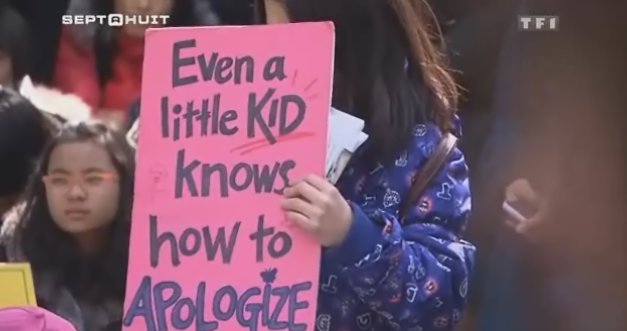
私たちのお婆ちゃんに謝れ 無邪気な子供に罪はない

「小さなガキ(kid)だって謝り方を知ってるぞ」 書いたのは大人だろう

「私たちのハルモニに謝れ。デモを行おう!」

過去67年間、日本は一度も謝罪していない


下の写真は、フランス軍の「慰安所(野戦移動売春宿)」。モロッコで撮影されたもの。参考までに。

At Camp Arblou l’Arbi
Le B.M.C.


2013/02/01

[資料]  海外の主要紙の報道状況(2010.10時点)


以前コメント欄で教えて頂いた。上久保誠人がまとめた海外の主要紙の報道状況(昨年の10月時点)。参考までに。

5年前の首相辞任理由はねじれ国会での困窮
“チーム安倍”の問題点と「本当の課題」

[...]また、海外メディアの批判の内容を精査すると、事態は更に深刻である。安倍首相答弁に関して、英エコノミスト誌は「日本の首相は組織的強姦に対する恥ずかしい戦いを仕掛けている」というタイトルの記事を掲載し、「安倍首相は、小泉前首相の靖国神社参拝で壊れた中国・韓国との関係を修復するための誠意を、彼自身の発言で無駄なものとした」「彼は、約20万人の慰安婦(朝鮮半島、中国、台湾、インドネシア、ビルマなどからの)が性奴隷労働を強制されたかどうか疑問を呈した」「これは言い換えれば、『彼女たち(誘拐され、奴隷化されレイプされたのだと主張している元従軍慰安婦たち)は嘘つきだ』ということを主張しているのと同義だ」と批判を展開した。

そして「安倍首相は耳が聴こえないのか?」と問いかけ、被害者の証言が次々と積み上がっている現状を指摘し、「日本政府がたとえそれを隠ぺいしようとしてもさらに証拠が出てくるだろう」とした。最後に「極右に左右される安倍首相は、これまでの日本の、戦争のトラウマに苦しむ人々のコミュニティの再建などに対する立派な働きを台無しにしてしまった。60年前のことを忘れたふりをするのは、現代の民主的な日本らしくない」と結論している。

その他外国メディアの報道も、一様に安倍首相に対して厳しかった。

歴史学者たちは、大部分が朝鮮半島と中国出身の少なくとも20万人の女性が第二次世界大戦中に日本軍の売春宿で強制的に奉仕をさせられたと考えている」(BBC)

歴史学者たちは、大多数の中国や朝鮮半島からの20万人の女性が2000箇所の慰安所で強制的に働かされたことを信じている」(ガーディアン)

大部分の歴史学者達や日本政府自身が、軍部と業者がアジアの約20万人の女性に部隊に対してセックスを強制させたとしている」(ロサンゼルス・タイムズ)

歴史学者達は、1930年から40年代にかけて朝鮮半島と中国出身者が大部分の約20万人の女性がアジア全域の日本軍の売春宿において奉仕させられたと指摘している。多くの女性達は、自分たちが日本の部隊に誘拐されて性的奴隷になることを強制されたと証言している」(ワシントン・ポスト)

「証人や犠牲者達や元日本兵の一部は、女性達の多くが誘拐ないし強制的に売春宿に送り込まれ、多数の兵士達に毎日強姦されたと証言している」(ニューヨーク・タイムズ)

などである。

まとめると、世界のメディアの論調を見る限り、「第二次世界大戦中、大部分が朝鮮半島と中国出身の少なくとも20万人の女性が日本軍の慰安所で強制的に奉仕をさせられた。これは信頼できる元従軍慰安婦らの多数の証言に基づくものであり、『歴史学者』の間でも、既に結論が出たことだ」が、従軍慰安婦問題の世界の常識になってしまっていると考えざるを得ない。[...]

5年前の首相辞任理由はねじれ国会での困窮
“チーム安倍”の問題点と「本当の課題」  
ダイアモンド・オンライン) 2012.10.10

2012/12/16

BBCの偏見 安倍政権誕生前夜


日本の選挙を前にして、BBCも次期首相となることが確実な安倍晋三を取り上げているのだが、「極右政治家」というレッテル貼りは、もはや韓国紙と変わらないレベル。安倍は移民排斥を訴えているわけでもないし、「国家の敵」を無人機で暗殺させるような政治家でもないのだが。英国の優秀な記者は、みんな中東へ配属されてしまうのだろう。

こうなると、欧米のメジャー紙の記者よりも無名の在日外国人ブロガーやネチズンの方がよく分かっているようで、ジャパン・プローブでもこんなエントリー ←が上がっている。

BBCに話を戻すと、14日の「安倍晋三のプロフィール」という記事では
He provoked anger in China and South Korea when he said there was no evidence that women were forced to become sex slaves by the Japanese army during World War II. He was forced to clarify his remarks and went on to issue an apology in parliament.

彼は第二次大戦中に日本陸軍によって女性が性奴隷になることを強制された証拠はないと言ったことで、中国や韓国の怒りを招いた。彼は自分の意見を明確にする事を迫られ、国会で謝罪した。


そして昨日の紙面では。

Although he is the leader of the "old" LDP, Mr Abe is far more right wing than most of his predecessors. In particular he has very right-wing views on the history of Japan's aggression during World War II.

He has repeatedly denied that the Japanese military forced Chinese, Korean and women from other Asian countries into sexual slavery - the so-called "comfort women".

Mr Abe even supports revoking a Japanese government statement, made in the early 1990s, acknowledging and apologising for what Japan did.

彼は「古い自民党」のリーダーではあるが、彼の前任者たちより遥かに右翼である。特に彼は第二次大戦中の日本の侵略の歴史についてかなり右翼的な見解を持っている。

彼は繰り返し、日本軍が中国、朝鮮や他のアジアの国々の女性を性奴隷制-いわゆる慰安婦-に強制したことを否定してきた。

安倍氏は、日本がやった事を認め謝罪した1990年代初めの日本政府の声明(引用者注:河野談話や村山談話のことだろう)を取り消すことにすら前向きである。


東京でこの記事を書いたRupert Wingfield-Hayesの河野談話に対する認識は明白だろう。彼は、河野談話を日本軍が女性達を強制的に性奴隷にした事を認めたものとして認識しているのである。

こういう人達が日本に対する偏見を広めるのに貢献した

こうした欧米のメジャー紙の報道を見る度に、「従軍慰安婦自体がなかったと言わんばかりの議論をするのは知的に誠実ではない(2010)」と開き直った河野洋平や、「問題の本質は...国が関与していたことだ(2012.8.25)」と強弁しつつ、「近隣国との信頼を築くうえで重要な役割を果たしてきた(2012.11.12)」と河野談話"改正"に反対している朝日新聞が、世論の指弾を受けずにいるというのは理解し難い。

Rupert Wingfield-Hayesは、このように記事を結んでいる。「殆どの日本人は安倍の歴史観には同意していない。そして、殆どの人は彼や橋下や石原に投票しない。なぜなら、彼らは中国に敵意を持つ右翼ナショナリスト政府を望んでいないからだ(原文では肯定文になっているが、間違いか?)。しかし、そうなる可能性は依然としてある」

余談: 在日外国人たちのニュースブログ、ジャパン・プローブでは、アルジャジールや欧米紙が同じように偏見に満ちた記事を掲載していると指摘されている。そういった欧米(&中東)メディアの報道を擁護するコメントがないのは、小さいが希望の光かもしれない。

Profile: Shinzo Abe

Shinzo Abe, 58, is the leader of Japan's opposition Liberal Democratic Party (LDP).

Six years ago he was flying high, becoming Japan's youngest prime minister since World War II in September 2006.

But he stepped down less than a year later, citing ill health, as support for his administration plummeted.

Now Mr Abe could be in position for another shot at Japan's top job, as the country prepares to vote in a general election.

Popular appeal
The Yamaguchi-born lawmaker hails from a high-profile political family.

His father, Shintaro Abe, was a former foreign minister. His grandfather was former Prime Minister Nobusuke Kishi, who was arrested as a suspected war criminal after World War II but never charged.

Mr Abe graduated in political science from Seikei University before studying politics at the University of Southern California.

He won his first seat in parliament in 1993 and then went on to become deputy cabinet secretary. In September 2003 he became secretary-general of the then-ruling LDP.

Appointed to the cabinet for the first time in October 2005, he was given the high-profile role of chief cabinet secretary.

When he became prime minister a year later, he was seen as a man in predecessor Junichiro Koizumi's image - telegenic, outspoken and with a similar popular appeal to voters.

In the early days of his premiership he scored a number of political hits, achieving a high-level rapprochement with China and winning local support with a tough line on North Korea.

A conservative, Mr Abe pushed for a more assertive foreign policy and a greater role for Japan on the world stage.

Under his administration, a bill passed setting out steps for holding a referendum on revising the country's pacifist constitution.

During his tenure, Mr Abe also called for a greater sense of national pride and backed a law requiring the teaching of patriotism in schools.

But a series of scandals and gaffes - both by him and his ministers - harmed the government, and his approval ratings fell dramatically.

He provoked anger in China and South Korea when he said there was no evidence that women were forced to become sex slaves by the Japanese army during World War II. He was forced to clarify his remarks and went on to issue an apology in parliament.

But most damaging to Mr Abe was the revelation that over the years the government lost pension records affecting about 50 million claims.

A heavy loss for his ruling LDP in upper house elections in July 2007 provided a catalyst for his decision to resign.

He stood down from the post in September of that year.

Second chance
With his election as LDP leader in September 2012, he returned to Japan's political limelight.

In recent months he has expressed a hawkish stance on territorial rows with China and South Korea.

"Japan's beautiful seas and its territory are under threat, and young people are having trouble finding hope in the future amid economic slump," he said.

"I promise to protect Japan's land and sea, and the lives of the Japanese people no matter what."

He followed up his party leadership win with a visit in October to the controversial Yasukuni Shrine, in a move that angered regional neighbours.

He has also expressed a desire to amend central bank laws to prop up the country's economy.

Of his resignation as prime minister, he said: "I'm still responsible for causing all of you a trouble with my sudden resignation as prime minister six years ago.

"I will do my utmost to rise back to power with all of you."


BBC 2012.12.14


Japan loses faith in traditional politics
By Rupert Wingfield-Hayes
BBC News, Tokyo

The traditional view of Japanese elections is that they are boring - prime ministers come, prime ministers go, but nothing really changes and Japan carries on regardless.

For more than half a century, it was right.

But in the past few years Japanese politics has changed. More importantly the Japanese public has changed - they have lost faith in the traditional political parties.

Three years ago they kicked out the old Liberal Democratic Party (LDP) and gave a landslide win to the Democratic Party of Japan.

This weekend they will do exactly the opposite - kicking out the Democrats and handing power back to the LDP. But they like neither of them.

Japanese politicians only have themselves to blame. Since the Japanese economic bubble burst in 1992, Japanese people have lived through 20 years of stagnation and deflation.

Ask any economist of any stripe what Japan needs and they will give you a very similar list.

Regulation needs to be loosened, foreign investment welcomed and women empowered to stay at work while raising families.

The government should invest in education and science, rather than in endless pork barrel infrastructure projects that Japan doesn't need. And people will need to pay more tax if Japan is to avoid one day going bankrupt.

Instead, Japanese politicians have put off and put off reform, while borrowing more and more to pay for spending. Public debt now stands at around 230% of GDP, higher than Greece or any other country in the Organisation for Economic Co-operation and Development (OECD).

To add insult to injury, Japan has been hit hard by the global financial crisis.

Looking for a safe haven, foreigners have bought vast amounts of Yen, pushing its value up more than 40% since 2008. Japanese exporters' profits have been squeezed to nothing.

So what does this all mean for Sunday's election?

Two things. Firstly voters will want to punish the party in power. Many will do this by voting for the LDP.

Secondly, ask any member of the public what Japan needs now and they will say "leadership". There is growing support here for non-traditional parties, particularly right-wing populists who promise strong leadership and bold answers.

The most prominent is the Japan Restoration Party led by two political mavericks - Toru Hashimoto, the Mayor of Osaka, and 80-year-old Shintaro Ishihara, the former governor of Tokyo.

On the campaign trail, Mr Hashimoto and Mr Ishihara have drawn thousands of eager listeners wherever they stop. Last weekend in Tokyo I heard Mr Hashimoto calling for the slashing of government waste, cutting bureaucracy and making English an integral part of Japanese education. The crowd loved him.

But he and Mr Ishihara hold some extreme right-wing views.

In a speech last year Mr Hashimoto said: "What Japan needs now is dictatorship".

Mr Ishihara has made so many outrageous statements it's hard to know where to start. He once said: "Women who live beyond their child-bearing years are useless and are committing a sin."

History questioned
He has called for a military regime and says Japan should build nuclear weapons. Both men are deeply hostile to China and have revisionist views on Japanese history.

And so does the man who will probably become Japan's next prime minister - LDP leader Shinzo Abe.

Although he is the leader of the "old" LDP, Mr Abe is far more right wing than most of his predecessors. In particular he has very right-wing views on the history of Japan's aggression during World War II.

He has repeatedly denied that the Japanese military forced Chinese, Korean and women from other Asian countries into sexual slavery - the so-called "comfort women".

Mr Abe even supports revoking a Japanese government statement, made in the early 1990s, acknowledging and apologising for what Japan did.

Most Japanese people do not share Mr Abe's views on history. And most will not vote for him, or Mr Hashimoto or Mr Ishihara, because they want a right-wing nationalist government that is hostile to China.

But it is still possible that is what they will get.


BBC 2012.12.15

2012/08/22

橋下発言 中央日報のすり替え

これは日本の強制連行派の学者や、朝日新聞、社会党が散々やってきたことでもある。それにしても文字だと伝わり難いニュアンスもある代わりに、曲解や矛盾がよく分かる。橋下大阪市長が慰安婦の強制連行を否定する発言をしたということで、中央日報が噛み付いているのだが・・・

「日本軍が慰安婦を連行したという証拠はない」とし、日本軍慰安婦制度の強制性を否定する発言をした。

こんな短い文章でも、前後が繋がっていないことは誰にでも分かる。前半では、市長が「軍が(強制)連行したという証拠はない」と発言したと言っているのに、後半では「強制性を否定」したと言っている。ようするに、前半と後半は別の話なのである。

橋下市長が否定している強制連行とは、こういう話↓である。

現在韓国で放映中のドラマ「ガクシタル」より

中央日報の言う「強制性を認めた『河野談話』」もこのような↑状況は認めていない。「『河野談話』の意味を縮小することを望む日本右翼の主張」ではなく、橋下は、河野談話の解釈としては正しいこと言ったのであり、河野談話を拡大解釈している韓国側の方が問題なのである。

橋下大阪市長「慰安婦、強制連行の証拠ない」

橋下徹大阪市長が「日本軍が慰安婦を連行したという証拠はない」とし、日本軍慰安婦制度の強制性を否定する発言をした。

21日の日本メディアによると、橋下市長はこの日、李明博(イ・ミョンバク)大統領の独島(ドクト、日本名・竹島)上陸に対する立場を尋ねる記者団の質問に対し、「従軍慰安婦という課題が(独島問題の)根」とし「「慰安婦が(日本)軍に暴行、脅迫を受けて連れてこられたという証拠はない。そういうものがあったのなら、韓国にも(証拠を)出してもらいたい」と述べた。

また「慰安婦制度は今から考えると倫理的に問題のある制度なのかもしれない」とし「韓国の言い分を全部否定しているわけではない」と述べた。

橋下市長のこの日の発言は、過去に慰安婦募集の強制性を認めた「河野談話」の意味を縮小することを望む日本右翼の主張を繰り返したもので、波紋が予想される。


ただし、こういう情報操作をやられることが分かり切っているところに、安易に「強制連行はなかった」などと発言する政治家は評価できない。事情に疎い欧米のメディアに"Comfort women denier(慰安婦否定論者)"と売り込まれるのがオチである。

読売新聞の記事を読んでも(読売は慰安婦の強制連行を否定する立場)、橋下が何を言いたかったのか普通の人には分からないだろう。日本の政治家は、なぜこうも誤解されるような、揚げ足を取られるようなことを言うのだろう?

追記: 中央日報(日本語版)は翌日の記事でも、「『慰安婦強制動員の証拠出すべき』橋下市長が妄言」というタイトルをつけながら、本文では「慰安婦制度の強制性を否定」したとか、「慰安婦連行の強制性を認めた『河野談話』」とか、懸命に言い繕っている。

挙句の果てに、日本の右翼は「制度自体には強制性」はなかったと主張しているが、韓国政府は「日本政府が河野談話を通じすでに強制性を認めたものと考えている」ので、妄言にはいちいち対応しないと結んでいる。

「慰安婦強制動員の証拠出すべき」橋下大阪市長が妄言

大阪市の橋下徹市長が、日本軍慰安婦制度の強制性を否定する発言をした。共同通信は21日、橋下市長がこの日李明博(イ・ミョンバク)大統領の独島(ドクト、日本名・竹島)訪問に対する取材陣の質問に答えながら「慰安婦が軍に暴行、脅迫を受けて連れてこられた証拠はない。あるなら韓国にも出してもらいたい」と話したと報道した。橋下市長は、「慰安婦制度は今から考えると倫理的に問題のある制度なのかもしれない」とし、韓国政府の主張を全て否定するものではないと付け加えた。

だが、こうした発言は慰安婦連行の強制性を認めた「河野談話」を正面から否定する日本右翼の主張を繰り返したものだ。1993年8月に当時の河野洋平官房長官は、「慰安所は軍当局の要請で設置され、軍が慰安所の設置管理と慰安婦の移送に直接的・間接的に関与した。慰安婦の募集は甘言や強圧など本人の意思に反した場合が多く、官憲などが直接加担したこともあった」という内容の談話を発表し日本政府の介入を認めた。だが、日本の右翼は「日本軍が慰安婦を暴行・脅迫した」という内容は含まれなかったとし、制度自体に強制性はないと主張してきた。 橋下市長のこの日の発言に対し、外交通商部のチョ・テヨン報道官は定例会見で、「われわれは日本政府が河野談話を通じすでに強制性を認めたものと考えている。直接的な立場表明はしない」と話した。政府や内閣の一員でない限り政治家の妄言にいちいち対応しないという意味だ。

弁護士出身の橋下市長は極右的な指向と独断的なスタイルで、「橋下」と「ファシズム」を合わせた「ハシズム」や「ハシスト」というニックネームを得ている。日本では次期首相候補として議論されるほど人気を得ている。


追記: ウォールストリート・ジャーナルにも橋下の発言が引用されたが、これを見ると、やはり海外の人には理解されないだろうなと思う。橋下は日本の記者にはこの後いろいろと補足説明しているが、外国に伝えられるときは「軍隊(人)が暴力を使って連行した証拠がないと主張した」としか伝えられない。必然的に、戦地での軍人による性暴力(軍規違反)のケース(スマラン事件など)を持ち出されるだろう。それについて、細かく釈明するチャンスは橋下にはないのである。

やはり、政治家には「強制連行」「強制性」という左翼用語を避けて説明する知恵がいる。


※読売新聞

橋下市長、慰安婦の強制連行「証拠ない」

大阪市の橋下徹市長は21日、いわゆる従軍慰安婦問題について、「慰安婦という人たちが軍に暴行、脅迫を受けて連れてこられたという証拠はない。もしそういうものがあったというなら、韓国の皆さんにも出してもらいたい」と述べ、旧日本軍や官憲による「強制連行」はなかったとの認識を示した。

大阪市役所で記者団の質問に答えた。

橋下氏の発言は、「資料の中に、強制連行を直接示す記述は見当たらない」とする政府の見解を踏まえたものだ。ただ、慰安婦問題の解決を主張する韓国側に論争を提起する姿勢を示したことで、韓国政府の反発を招く可能性もある。

橋下氏は、李明博韓国大統領の竹島訪問の強行について、「従軍慰安婦という課題が根っこにある。領土問題の前提として、従軍慰安婦について強制の事実があったかどうかを、韓国ときちんと議論すべきだ」と強調した。
読売新聞 2012.8.21

2012/08/05

慰安婦問題、FOXニュースに取り上げられる


右と左、しばしば見解が対立するFOXとCNNだが、ここでは一致している。つまり、保守もリベラルもアメリカでは慰安婦=日本の戦争犯罪なのである。アメリカの戦争問題なら、両者の間でバトルが始まり国民は両方の意見を耳にすることになるが、日本軍慰安婦問題に関しては一方的な情報しかアメリカ人には届かない。

それに腹を立てても仕方がない。現実は現実として受け止め、状況分析を続けていこう。

1)日本政府は言い訳をしない。

日本政府の消極姿勢がプロパガンダの拡大を許している。CNN同様FOXニュースも日本政府に反論の機会を与えている。しかし、日本は「謝罪しました」「償いました」を繰り返すばかり。よって、FOXニュースは「数万人のアジアの女性が(日本軍によって)拉致され、日に40~50回レイプされ、逆らった者の多くは殺された」という話を、日本政府が認めたものと勘違いしている。

2)抗議に行った日本の国会議員たちは、現地をますます硬化させた。

こうなってしまっては碑の撤去は無理だろう。レポーターの言うThat's not gonna happen(そうは問屋が卸さない)はかなり強い表現。そもそも地元に暮らすニュースキャスターすら知らなかった慰安婦の碑の話が、日本の国会議員の訪問で一躍注目を集めた。

3)イメージ戦略で、今回も日本は完敗。

碑の前に星条旗と韓国旗が建てられている。暫くウォッチして来たが、こんな光景を初めて見た気がする。TVの取材を意識してだろう。碑への抗議は、韓国系だけでなく、アメリカに対する挑戦であるという演出?(ネットでも、アメリカの一コミュニティのことに日本が口を出すべきではないと怒ってるアメリカ人がいたが)。


小さいところでは、

a)ハルモニが喋っているのは、支援団体が用意した殺し文句。初めて聞くFOXニュースのスタッフには新鮮だったろうが、これは演出。

b)日系人もこの問題では日本の味方ではない。逆に言うと、日系人すら納得させられずにアメリカ人を説得しようというのが無茶なのである。対照的に、韓国側は韓国系アメリカ人を味方に引き込んだことが勝因。

c)FOXニュースのレポーターは、「日系人は悪くない」と強調。不必要に敵を増やしたり差別と誤解されかねない言動をしてしまう日本の政治家との、これがKY力の差。


地元在住のキャスターだが、碑の存在は知らなかった

キャスター: パリセイズパークは私の今住んでいる所で、とっても綺麗な所なの。だけど残念ながら今ここで起こっていることは、あまり美しいとは言えないの。論争になっていて、醜いことになってる。何が起こっているか教えて。

レポーター: 貴女がニュージャージーに住んでいるとは知らなかったわ。この辺に住んでるとは知らなかった。綺麗な所ね。ニューヨーク郊外のジョージ・ワシントン橋のすぐ向こうで。

ここニュージャージーで、この小さな碑が世界中で大きな論争を巻き起こしています。誰がこんな事を予想したでしょうか。なぜこの碑がここにあるかというと、この碑は、何万人という若いアジアの女性たちに敬意を表する為です。彼女たちは、家庭から誘拐(kidnaped)拉致されて(abducted)日本軍の男たちの為に性奴隷として働いた人たちです。第二次大戦中のことです。明らかにたくさんの議論を呼んだのです。最近日本から国会議員から来て、この碑を撤去するよう頼んで来ました。ここのコミュニティ、首長は「そんな事はさせない」と言っています。

老婆を嘘つきと言った時点で負け

キム・ボクトン(元慰安婦): 私が連れ去られたのは14歳の時でした。

日本の「専門家」は、強制連行の有無は論点ではないと説明してきたが・・・

ナレーション: 慰安婦。何万人もの若いアジア人女性が(日本軍に)誘拐され、第2次大戦中、日本軍の兵士たちとセックスすることを強制されました。いわゆる慰安所で起こったことは、今も生き残った犠牲者たちを苦しめています。

キム: 言葉であの苦しみを説明するのは不可能です。私はたった14歳でした。私は男の人のことについて何も知らなかった。男としたこともありませんでした。

名前は出て来ないが画家S・カバルロも取材を受けている
彼の認識不足は写真家レイチェクからも批判されていたのだが・・・

歯止めが効かない海外では、プロパガンダは先鋭化
日に50回レイプされ、逆らえば殺された

男: 彼女たちは一日に40回から50回もレイプされたんです。想像して見て下さい。

レポーター: そんなことが出来るなんて・・・。

男: その通りですよ。14歳、17歳、20歳・・・。

ナレーション: 何年にも渡って、女性たちは寒く暗い部屋に暮らした(南方戦線も寒かったのか?)。拒否した者は、多くの場合殺されました

キム: 誰かが話さなければ、私たちは忘れられてしまう。

碑には20万人以上の女性が日本軍によって拉致された、と

ナレーション: 今日、住民の半数がコリア系であるパリセイズパーク、彼女とその他多くの女性の話は小さなモニュメントを通じて記憶されています。歴史を、どこかの誰かが忘れたがっている歴史を教えているのです(米軍の慰安婦については忘却の彼方。まさに目くそが鼻くそを笑っている)。

子供に語らせる手法は、碑建立運動の時も用いられた

若者: このことを聞いた時、私は恐怖しました[一部聞き取れず]

ナレーション: 碑は激しい議論を呼びました(?)。市長によれば、日本の公人が最近彼のもとを訪れ、撤去するよう頼んだのです。

反日でなかった市長(山際澄夫談)も、すっかり態度を硬化
日本側のアプローチもお粗末すぎた

市長: 彼らは私の所に来て、慰安婦など起こらなかったという証拠がある嘘をついた女性たちだと言ったんです。

釈明にならない日本政府の釈明
FOXもCNNも日本政府に釈明の機会を与えているのだが・・・

ナレーション: FOXニュースに対する説明で、日本政府は、碑については触れていないものの、これらの女性たちに対する彼らの仕打ちについて、数年に渡り何度か謝罪したことを上げ、生存者一人一人に2万5千ドルを払ったと私たちに述べました。女性にとっては、取るに足らない「慰安」です(米国は一銭たりとも払ってないのに)。

運動家らが練りに練ったセリフを繰り返す

キム: この問題を、可能な限り早く解決したいんです。私たち老婆が心の平穏を・・・。

いつの間にか星条旗が・・・米国人の心を掴む演出?

レポーター: うん。聞いていて辛いわね。でしょ?今の慰安婦人(comfort lady)によれば、61人の慰安婦が現在も韓国で生存してます。彼女の話は、あまりにも悲惨。彼女の人生はあの体験のせいで全て変わってしまった。10代、20代にかけて。彼女によれば、今になって話すのは、彼女たちは80代90代なわけだけど、こんな事が将来他の女性にも起こってはいけないから話すんだと、貴方たちにこの話を知られないまま死にたくないと。それから、彼女は(力を込めて)この碑が間違いなくニュージャージーのこの場所に立ち続けることを望んでいます。ジュリアにお返しします。

政府が事実と認めたのに、それを認めない日本人がいる
嫌悪感を露わにするキャスター(米国はいつ慰安婦に謝罪するの?)

キャスター: 日本政府がこれが実際に起こったという事を認めたってことは、その碑が正しいってことで、碑を撤去すべきだと言って来た(日本の)代表団の人たちは、意味不明だし、何ていうか、私には不快な感じ(?)に聞こえるわね。

予防線はさすが、「日系米国人は別よ」

レポーター: 本当にね。ジュリア、言っておきたいんだけど、私、韓国に行ってこの女性たちが暮らす避難所(ナヌムの家)に滞在したりして、この件に深く関わった芸術家(S・カバルロと思われる)と話したんだけど、彼が言うには、日系アメリカ人はまったく違うって、この問題に対する彼らの態度はここに来た日本の国会議員とはまったく違うって、日系アメリカ人は、彼の経験では良心の呵責を感じているの。ここに来た日本の国会議員たちは、碑を嫌がってるの。

キャスター: そりゃまぁ、彼らはそんな事が起こったとは認めたくないからよ。あまりにも見っともないから。・・・アインスリー、ひどい話だったけど、ありがとう。

レポーター: ひどい話よ。ひどい話。あの女性たちが体験に敬意を表して。ありがとう。

FOX NEWS 2012.8.3